
Toso: evolving consumption, recovering exports and sustainability at the heart of the strategy
Toso: evolving consumption, recovering exports and sustainability at the heart of the strategy
- Information
Amid changing consumption patterns, international markets still affected by geopolitical tensions and growing interest in products with low or no alcohol content, the wine sector is undergoing a profound transformation. In this context, Toso continues to focus on enhancing and diversifying its offering, product innovation and a sustainability journey involving the entire production chain.
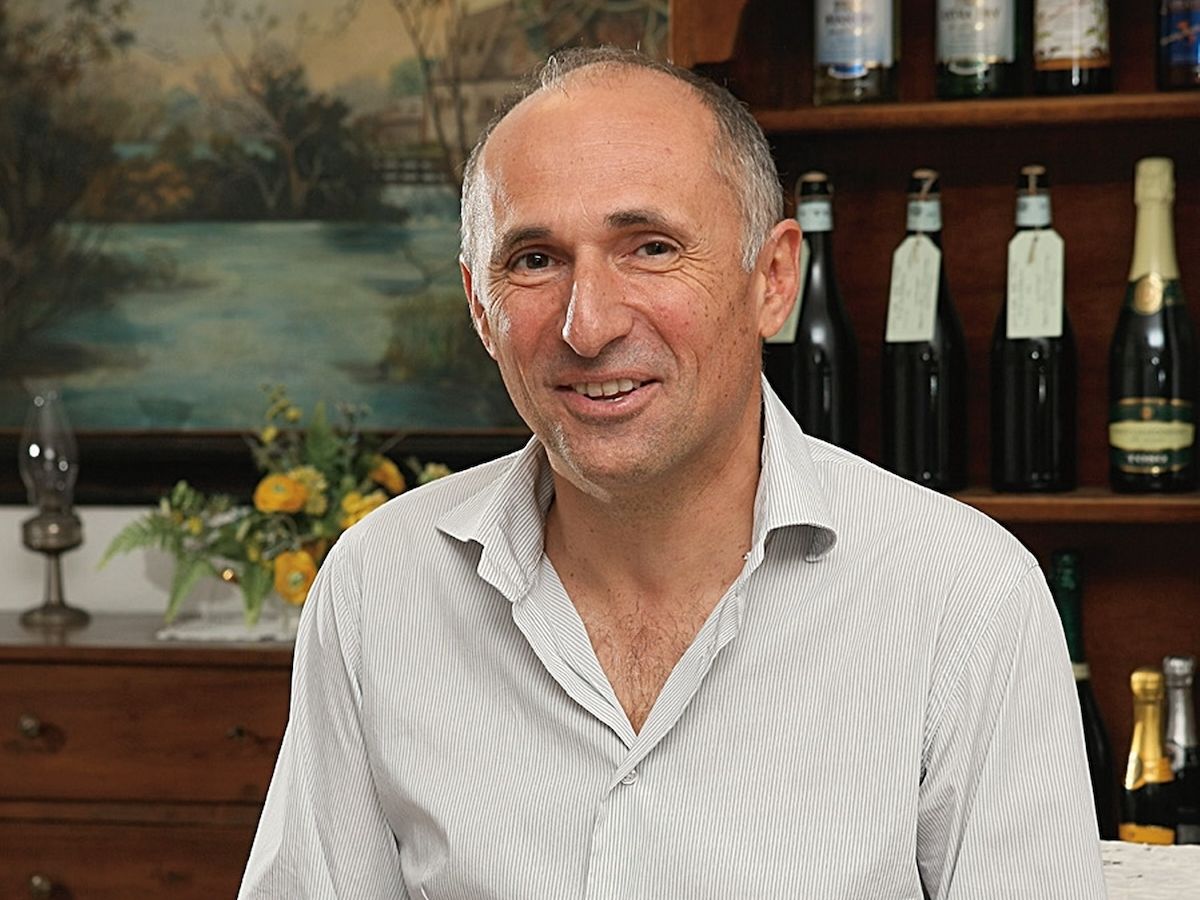
Taking stock of market trends, the company’s strategies and its growth prospects is Toso’sCEO Gianfranco Toso.
The wine sector is experiencing a period of change. How is the taste of the end consumer evolving, and how is Toso positioning itself in this scenario?
One of the most evident trends we are observing is the decline in red wine consumption, alongside the continued growth of white wines and sparkling wines. This change is mainly linked to evolving consumption habits. Today, people go out less often for traditional dinners and favour occasions such as aperitifs; they also follow lighter diets and eat less red meat. All these factors inevitably influence the choice of wine too. Climate change is also affecting consumption. Increasingly hot summers are prompting consumers to choose refreshing drinks: white wines and sparkling wines, served at low temperatures, are more suitable than reds. Another highly topical issue is no-alcohol products. In the Fiorelli range, we offer no-alcohol products made directly from grape must, without resorting to dealcoholisation of the wine: we use the must as it is, without initiating the fermentation process. This is a different approach from that adopted by other Italian companies and in many European countries, where the wine is produced first and the alcohol is removed afterwards.
Why did you choose this approach?
We carried out some trials with dealcoholised wines, but the results did not satisfy us. Removing the alcohol also means losing an important part of the wine’s aromatic profile and structure, inevitably diminishing the quality of the product. In my view, consumers also associate wine with the presence of alcohol and the resulting organoleptic balance. This is why we believe it is more interesting to work with unfermented must, which fully preserves the characteristics of the grapes, their aromas and their quality. Naturally, this is a drink that cannot be directly compared with wine, but it is nevertheless extremely pleasant to taste and represents an interesting option for those seeking a quality non-alcoholic alternative.
Can you take stock of the past year?
The 2025 was a challenging year for Toso, particularly in terms of exports. The war between Russia and Ukraine continues to have a significant impact: Russia has practically stopped buying our products, whileUkraine, for obvious reasons, is still recording volumes well below those of the period before the conflict. The repercussions have also been felt in Europe. Important markets such as France and Germany, which have always represented some of our main commercial outlets, have shown no significant growth. This was compounded by uncertainty in the US market, where in 2025 the issue of tariffs and the Trump administration’s trade policies further curbed trade. The only signs of growth came from some Asian countries, but these are markets which, at least for us, are still too small to offset the losses recorded elsewhere. The Italian market remained broadly stable, despite difficulties linked to price pressures and an unfavourable overall environment. The 2025, therefore, ended for us slightly down on the previous year, with turnover of 40 million euros.
Does the 2026 follow the same trend?
The 2026 is showing decidedly more encouraging signs and is enabling us to fully recover what we lost. However, some structural issues remain: Russia has not yet recovered, Ukraine is improving but is still far from its pre- 2022 levels, and the United States —although showing signs of recovery—remain below the volumes we recorded in the past.
Are you interested in other countries abroad?
Toso’s turnover is concentrated mainly in the European Union. However, we are looking with great interest at Asia, because that is where we see the greatest growth prospects. Western Europe remains very important, but it is also a mature market where it is difficult to envisage significant increases in consumption. Rather than overall demand growth, we are seeing a shift in consumer preferences. As I mentioned, the decline in red wines is partly offset by increased demand for white wines, sparkling wines and other products that are better suited to new consumption occasions. In Asia, by contrast, the situation is different. In many countries, wine and sparkling wine consumption is not yet as well established as it is in Europe, but there is growing curiosity about these products and more and more consumers are discovering Italy’s wine culture. There is also a decisive factor: market size. The populations of Asian countries are large enough to offer, in the long term, development opportunities that are difficult to find in other parts of the world.
How is your turnover divided?
Today, the Italian market accounts for approximately 35% of our turnover, while the remaining 65% comes from exports. As for sales channels, modern retail accounts for approximately 50% of business in Italy and, more or less, has the same incidence internationally. In recent years, however, we have recorded growth in the wholesalers and distributors channel, driven by the steady growth of our Gamondi aperitif range, while the share of large-scale retail has declined slightly. My impression is that modern retail is increasingly focused exclusively on the price lever. To differentiate and enhance our positioning, therefore, we have invested in making our business increasingly sustainable, obtaining important certifications such as, for example, Sustainable Winery Equalitas.
Which segments do you cover in modern retail?
In modern retail, we are present with sparkling wines, still wines and Amaro Toccasana, particularly through the Fiocco di Viterange, but price considerations end up penalising products like ours, made with a clearly defined quality positioning. We use materials and processes that affect the final product and form part of its identity. One example is the distinctive string binding, made entirely by hand: a process that requires more labour than a traditional screw-cap closure and makes the bottle recognisable. Over time, it has become a distinctive element of the brand because it conveys craftsmanship, care and quality. If we decided to replace it, the cost of the bottle would fall by as much as 20%, but it would no longer be the same product. For us, this is a choice based on non-negotiable values.
Speaking of Fiocco di Vite, what does the range comprise and what consumer needs does it meet?
These are quality sparkling wines for all occasions when people gather socially at home. In modern retail, the use of promotions is very widespread, and this inevitably also influences consumer behaviour. Consumers often choose the product on offer, which leads them to alternate between different types of wine: one day they buy a Prosecco, the next a Piedmontese white wine, following the opportunities presented on the shelf. The situation is different for sweet wines, such as Brachetto and Moscato, which are part of the same range but respond to different consumption dynamics. These are highly seasonal products, associated mainly with festive occasions.
You previously mentioned Fiocco di Vite’s distinctive packaging. How important is design in attracting and guiding consumer choice in modern retail aisles?
In my view, the screw cap is the most standardised solution on the market and, in the minds of many consumers, is still associated with a lower quality positioning. The Fiocco di Viterange, by contrast, stands out precisely because of its refined, handmade packaging, which immediately captures attention and conveys the craftsmanship behind the product. In this way, the bottle acquires a strong personality and manages to communicate added value even before tasting. The market research we have carried out confirms that consumers clearly perceive this value and that it is also well regarded by large-scale retail, which, in this period of stagnant consumption, is nevertheless mistakenly viewing price as the main lever for supporting sell-out.
In terms of distribution, are you present throughout Italy?
We are present throughout the country, but distribution varies depending on the area and the level of interest in different types of product. Some sparkling wines have a very wide distribution. One example is Prosecco, which is consumed throughout Italy. Other products, by contrast, have a strong regional identity: Pinot Bianco, for example, is more widespread in certain specific areas, while red wines such as Barbera and Bonarda are more concentrated in regions such as Piedmont and Lombardy, although they also perform well in other parts of the country. Generally speaking, our presence is stronger in northern Italy, particularly in Area 1 and partly in Area 2 NielsenIQ, but we are active throughout the country, including the south.
Are you open to contract production?
This is a business area that interests us and which we are monitoring closely, especially with a view to exports, where volumes are considerably more significant and allow us to work with greater continuity. In the Italian market, by contrast, we have never invested in a particularly structured way, precisely because of the limited size of demand.
As regards sustainability, what results have you achieved over the past year and what projects are you pursuing?
For us, sustainability is a practical journey in which we continue to invest consistently. Several years ago, we began implementing a series of structural measures. First of all, we do not use fossil fuels: the thermal energy we use comes from woody biomass sourced from within a maximum radius of 30 kilometres of the plant, in line with a short supply chain approach. We have also installed a photovoltaic system with a capacity of 600 kW, which covers approximately 30% of our energy needs. In terms of water, we recover wastewater and reuse it in production cycles, for example in cooling systems and for external washing, thereby significantly reducing waste. Our journey is also continuing on other fronts: we are working to further reduce consumption through more efficient heating systems and are assessing the introduction of an electric company fleet, using the energy we generate ourselves. Alongside infrastructure investments, we have obtained various certifications relating to sustainability and energy efficiency. Over time, we have replaced all traditional lamps with LED systems and adopted energy-saving solutions. This is an ongoing commitment, involving progressive measures and continuous improvements as part of a long-term strategy.
What objectives have you set for the near future?
In the short term, maintaining our position and defending our market space would represent an important result for us. International uncertainties, linked to conflicts and the geopolitical situation, continue to have a significant impact on consumption. In these circumstances, families tend to reduce their spending, inevitably affecting non-essential consumption too. For this reason, stability is the main objective in the short term. Looking further ahead, however, the strategy remains one of growth, based on product quality and effective marketing strategies, particularly in the product categories showing the best performance, both in modern retail and in the out-of-home channel.
This article was translated from the original Italian version with the assistance of artificial intelligence. In case of discrepancies, please refer to the original Italian version.