Dalterfood Group: the future speaks of multichannel operations and personalised offerings
Dalterfood Group: the future speaks of multichannel operations and personalised offerings
- Information
There are years that mark key turning points. 2026 certainly was one for Dalterfood Group, which opened the new production plant in Parma and acquired For Food France, a long-standing French distributor of Italian cheeses across the Alps.
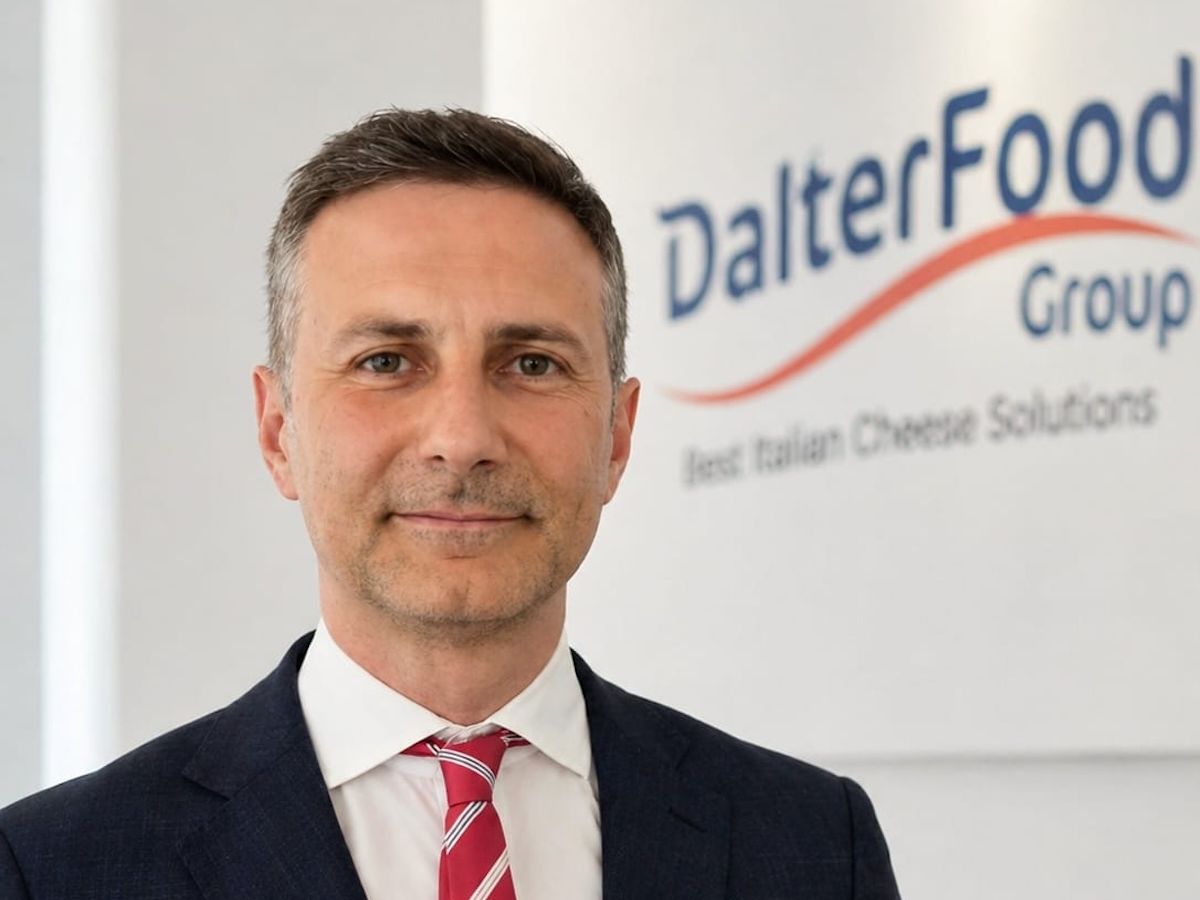
Not only that: last year also saw the achievement of record revenue: 200 million euros. For a company strongly focused on international markets – exports account for 85% of the business, while the Italian market accounts for 15% – and on producing private label, made in Italy products and supply-chain transparency, two strengths remain to be leveraged to drive further business growth, as explained by new general manager Antonio Gizzi.
What were the main factors driving the Group’s growth in 2025?
The performance of our foreign subsidiaries has certainly played a key role: in Germany through Vip Italia and in the United Kingdom through Dalter Uk. Abroad, the value of made in Italy continues to represent a strategic asset. Italian products are highly appreciated, and we have succeeded in unlocking their potential by leveraging our main distinguishing features. The first is our consultative approach, which enables us to listen to customers’ needs and develop tailor-made solutions, building long-term relationships. This is complemented by the credibility that DalterFood Group has built internationally over almost fifty years of activity. Another strength is the Parmigiano Reggiano supply chain: long-standing relationships with farmers and our own dairies guarantee quality, traceability and transparency throughout the value chain. Food safety also receives considerable attention. The certifications we have obtained and our constant process checks enable us to offer customers and end consumers the highest guarantees in terms of product reliability and quality. Finally, the value of our people remains a central element of our strategy. We invest in organisational wellbeing, gender equality and inclusion, convinced that creating a positive and rewarding working environment enables people to make the best use of their skills and makes a decisive contribution to the company’s growth.
How is revenue currently distributed across the different channels?
The growth recorded in 2025 was broad-based, both geographically and in terms of sales channels. Retail remains the main driver of the business. At the same time, our model is strongly multichannel: alongside large-scale retail, the industrial sector and food service are also playing an increasingly important role, making a significant contribution to the evolution and diversification of the business.
How are you performing in 2026?
The trend remains positive and our forecasts point to further development in the coming years. However, the aim is not to pursue accelerated growth or temporary peaks, but rather a path of steady, balanced and sustainable expansion over time. For us, development must be accompanied by a parallel strengthening of the organisation internally. Growing means investing in processes, people, skills and operational capabilities, so that we can continue to guarantee the high standards of quality, service and reliability recognised by the market.
What is the Group’s strategy based on?
Our strategy remains focused on consolidating our positioning as a multichannel company, continuing to invest in our various routes to market and strengthening our presence in the markets where we operate. The recent investment in France, involving the acquisition of For Food France, is also part of this direction; this is a market in which we aim to expand further in the coming years. The objective is to support development through an increasingly broad and innovative offering, maintaining a strong specialisation in the dairy sector and offering customers personalised solutions capable of meeting the specific needs of different markets and consumer segments.
What objectives have you set for the French market in the short and medium term, also thanks to the For Food France transaction?
France is the leading export destination market for Italian cheeses and, for this very reason, offers significant room for development. The decision to strengthen our presence through a local subsidiary stems from our desire to be closer to customers, better understand their needs and guarantee an even higher level of service. A direct presence in the country enables us to improve our responsiveness, ensuring greater speed, service quality and a closer relationship with the market. In addition, we can draw on the experience gained in other countries, such as Germany and the United Kingdom, where the local-subsidiary model and multichannel approach have already delivered significant results. The aim is to replicate this journey in France too, progressively consolidating our positioning and achieving market shares in line with those attained in the other geographical areas where we have a direct structure.
What are your flagship products in the dairy sector in Italy and abroad?
Parmigiano Reggiano remains our signature product and the company’s main asset. It is the cheese with which we began and continues to represent a distinctive strength, also thanks to an integrated and controlled supply chain that enables us to guarantee high standards of quality, traceability and transparency. Over the years, however, we have significantly expanded our product portfolio, complementing hard cheeses with an increasingly extensive offering in the fresh and soft cheese segment. Today our range also includes buffalo mozzarella, burrata and gorgonzola, enabling us to meet increasingly diverse consumer needs.
Are you planning to innovate your offering?
In terms of innovation, the objective is to develop solutions in line with changing purchasing behaviours. Today’s consumer is looking for practical, balanced and versatile products, suitable for different times of day and capable of combining quality, convenience and ease of use. This need concerns not only the end consumer but also the Horeca channel, which is increasingly seeking solutions that enable it to optimise operational processes, reduce preparation times and minimise waste. Having products that are already balanced and easy to portion makes it possible to use only what is needed, with benefits both in terms of management efficiency and sustainability.
The opening of the Parma plant represents another strategic milestone for Dalterfood Group. To what extent will it increase production capacity, and what opportunities will it create?
Significant investments have been made in plant and machinery at the facility to bring it into line with quality standards and make it efficient. This project primarily addresses the need to increase production capacity. One of the main objectives is in fact to double current capacity, so as to support business development and growing demand in our key markets. At the same time, having two plants with similar equipment and production characteristics represents an important guarantee for customers in terms of business continuity. Having replicable production sites enables us to ensure greater operational flexibility, continuity of supply and even greater service reliability. Finally, this investment reaffirms the company’s strong ties with the local area. We were born in the heart of Emilia, with our first plant in the province of Reggio Emilia, and the decision to build the new site in Parma confirms our intention to continue investing in the Italian Food Valley, an ecosystem that represents an element of identity and strategic importance in our growth journey.
Do you have any other investments planned?
Technological innovation, sustainability and increased production capacity are closely interconnected elements in our development strategy. That is why we continue to invest both in new machinery and in advanced software solutions. The opening of the Parma plant, with its larger spaces and redesigned production organisation, enables us to optimise processes, significantly reduce waste and generate greater operational efficiency, with positive effects also on the level of service offered to customers. Investments in digitalisation concern the entire supply chain. They range from the digitalisation of dairies to the automation of production-process planning, through to systems for monitoring line performance. The aim is to increase efficiency, improve process control and obtain increasingly precise data to support operational decisions and guarantee high standards of quality and service.
What challenges lie ahead for the dairy sector?
Rather than challenges, I would speak of an opportunity: the opportunity to continue enhancing the strength of made in Italy in international markets. Our commitment is to work with the utmost fairness and transparency, explaining and sharing with consumers and international partners the value of what we do every day, from the supply chain and production processes through to guarantees of quality and food safety. It is clear that operating according to these standards entails significant investment, and that the geopolitical context of recent years has generated additional pressures and costs along the supply chain. Nevertheless, thanks to the established relationships built over time with suppliers and partners, we have succeeded in preserving the high levels of service, reliability and continuity that have always distinguished our market offering. In an increasingly complex scenario, the ability to work together as a system, combined with the strength of made in Italy and supply-chain transparency, continues to represent one of the main competitive factors in our international development.
What role does PL play today, and how might it evolve in the future?
Private label has undergone an extremely positive evolution over the years. Historically, it emerged as a segment strongly focused on saving and value for money; today, however, it has assumed a profoundly different positioning. Its share has grown significantly, both in Italy and, even more so, in international markets, where the importance of private label has traditionally been higher. Above all, retailers have been able to reposition private label, transforming it from a merely affordable alternative into an offering capable of conveying quality, reliability and guarantees. Consumers choose own-label products because they trust the retailer and recognise the selection, control and verification work the chain carries out before placing a product under its own brand. In this context, the role of industry is fundamental. Producers are called upon to consolidate and strengthen this new positioning of Mdd, while maintaining high standards of quality, safety and innovation. The challenge is to continue enhancing all the elements that contribute to its credibility, preventing it from once again being perceived as a choice driven exclusively by price and instead preserving its role as a lever for consumer trust and value creation.
Could you outline the Group’s strategic priorities?
In a geopolitical context still characterised by considerable complexity and uncertainty, our primary objective is to continue guaranteeing the standards of quality, service and reliability that have always distinguished the company. In the short term, another challenge concerns completing the process of bringing the new Parma plant fully into operation. We are continuing with the installation of the equipment and the optimisation of production processes, with the aim of fully exploiting its potential in terms of capacity and efficiency. Another focus is the integration of the French subsidiary, acquired last February. Since then, we have been working according to a structured plan to complete its integration into the Group and replicate in this market too the organisational and commercial model that has already delivered positive results in other regions. Finally, sustainability remains an essential pillar of our growth journey. This year we will present our fourth sustainability report, a milestone that demonstrates the attention we devote to these issues.
This article was translated from the original Italian version with the assistance of artificial intelligence. In case of discrepancies, please refer to the original Italian version.