Plant-based: why does it represent only 2,4% of food consumption?
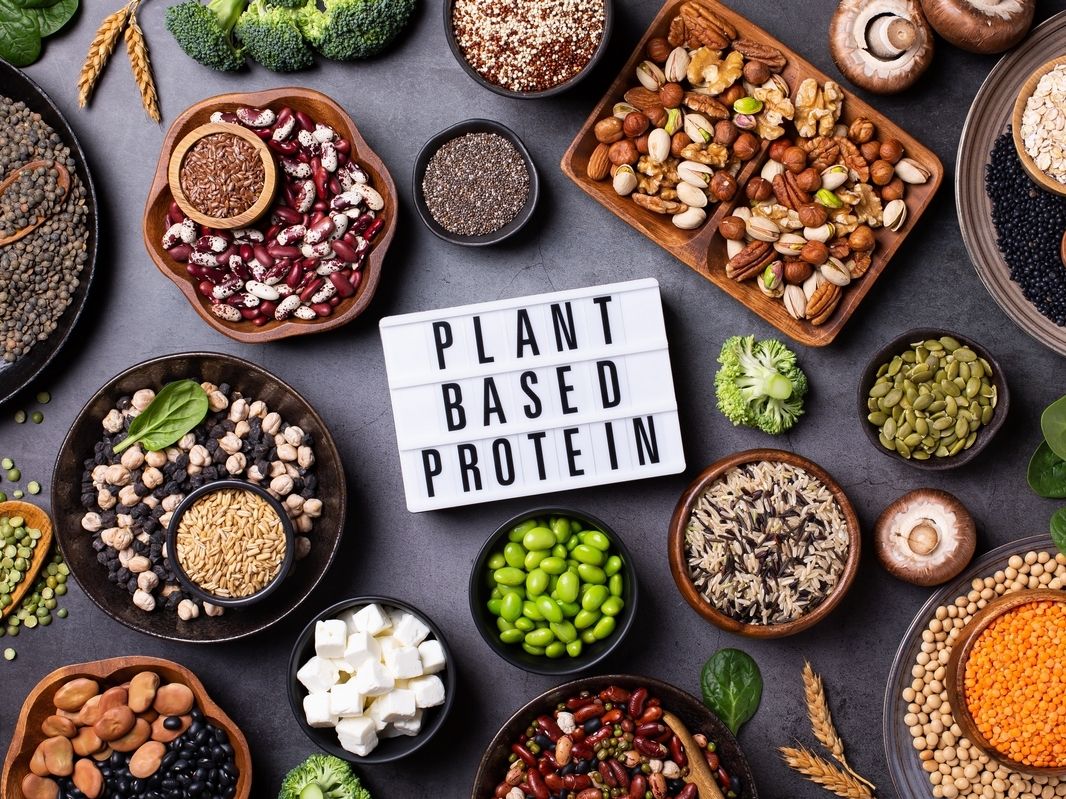
Plant-based: why does it represent only 2,4% of food consumption?
- Information
The plant-based market, now well established in Europe, still has considerable room for growth. This is according to Circana, which presented the data at the Plant FWD conference (Amsterdam 8 and 9 April).
A gap between supply and demand
Vegan food and beverages now account for 16,3 billion euros, combining the main European markets: the United Kingdom, Germany, Italy, Spain, France and the Netherlands.
The change 2025/2024 was +5,1%, but the segment represents only 2,4% of total food sales, highlighting a clear gap between consumer interest and the actual scale of supply.
The positive fact is that growth is increasingly driven by daily consumption, especially of nuts and seeds, which account for 45% of the value, followed by dairy alternatives (21%) and ready meals (15%), while meat and fish substitutes are still marginal, at 4 per cent.
This change reflects an important evolution: plant-based is no longer simply a novelty, but is becoming integrated into daily diets.
Demand is therefore not limited to the 11% of Europeans who describe themselves as vegan or vegetarian, but is driven by so-called flexitarians, a group that grew to 31% in 2024, compared with 21% in 2023.
Plant-based in the major countries
The increase in plant-based products, consistently greater than that of traditional equivalents, nevertheless varies from country to country.
Germany is leading, with a 7,2% increase in the value of purchases and a 4,2% increase in volume. The trend in Spain is very similar, accelerating by 7,5 per cent in value.
In contrast, the United Kingdom, one of the largest markets, with 4,5 billion euros in consumer spending, is instead showing a [[ARTW_HTMLOPEN_AABA]decline in volume, of 0,7% year on year.
According to Circana, these divergences demonstrate how important it is for plant-based to adopt consistent and coherent pricing and development strategies.
Affordability comes to the fore
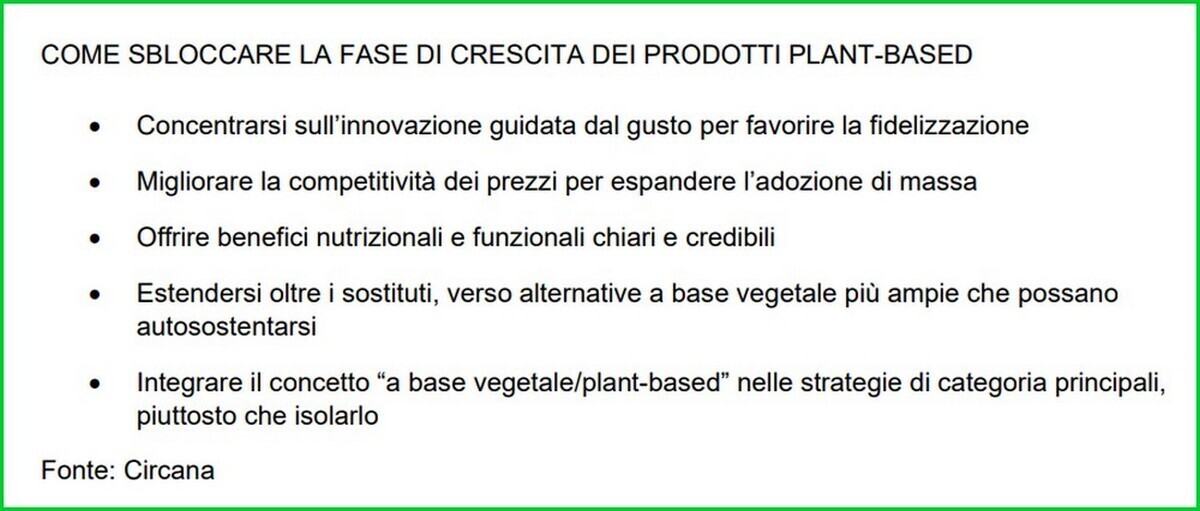
Although the next phase of growth will continue to be influenced by factors such as health and nutrition, the search for affordability will become increasingly prominent.
“Price differences between plant-based and animal-based proteins remain an obstacle – writes Circana – and highlight the need for greater accessibility of plant-based products in order to encourage wider adoption.”
Ananda Roy, Svp global thought leadership and consumer goods advisor for Europe at Circana, draws the conclusions: "This market has reached a decisive moment. The foundations for growth are solid, but the next phase will not be driven by hype or novelty. Instead, it will depend on how effectively industry and retail operators can offer products that fit into everyday lifestyles. We are witnessing a clear shift from niche innovations based on imitating traditional food to more natural, functional and accessible offerings. The winners will be those who manage to bridge the gap between taste, nutrition and price, integrating plant-based products into everyday consumption occasions."
Other articles:
Plant-based appeals to half of Italy
Meat sounding: the European Union reconsiders
Plant-based: the new challenges facing the Italian market
This article was translated from the original Italian version with the assistance of artificial intelligence. In case of discrepancies, please refer to the original Italian version.