DalterFood Group presents its 2025 sustainability report, the first to undergo independent verification
DalterFood Group presents its 2025 sustainability report, the first to undergo independent verification
- Information
DalterFood Group has published the fifth edition of its sustainability report, which for the first time underwent a limited assurance engagement by the independent audit firm Deloitte & Touche.
The independent verification strengthens the reporting process and provides an additional level of assurance regarding the reliability of the information and data reported, confirming the Group's intention to communicate its economic, social and environmental performance in an increasingly rigorous and transparent manner.
International growth
2025 marks a significant achievement for DalterFood Group, which achieves record turnover of 200 million euros, with 86% of revenue generated abroad. This milestone confirms the Group's strong international focus, also supported by its direct presence in markets through the sales subsidiaries DalterUk, in the United Kingdom, and Vip Italia, in Germany. The development process continued in February 2026 with the acquisition of the long-established distributor For Food France, which further strengthened its presence in the French market.
At the heart of this growth is a B2B model built on the ability to interpret the needs of different customers and channels. Over the years, DalterFood Group has consolidated partnerships in retail, for which it produces and packages branded products, in the various sectors of the food industry, where cheese is used as a high value-added ingredient, and in food service, from collective and commercial catering chains to new consumption models linked to meal kits and delivery. The Group responds to this diversification by developing products, formats and solutions according to specific application and commercial needs.
Central to this approach is listening to customers, supported by direct dialogue, the annual customer satisfaction survey and participation in the main national and international trade fairs, important opportunities to engage with current and potential customers and observe market developments.
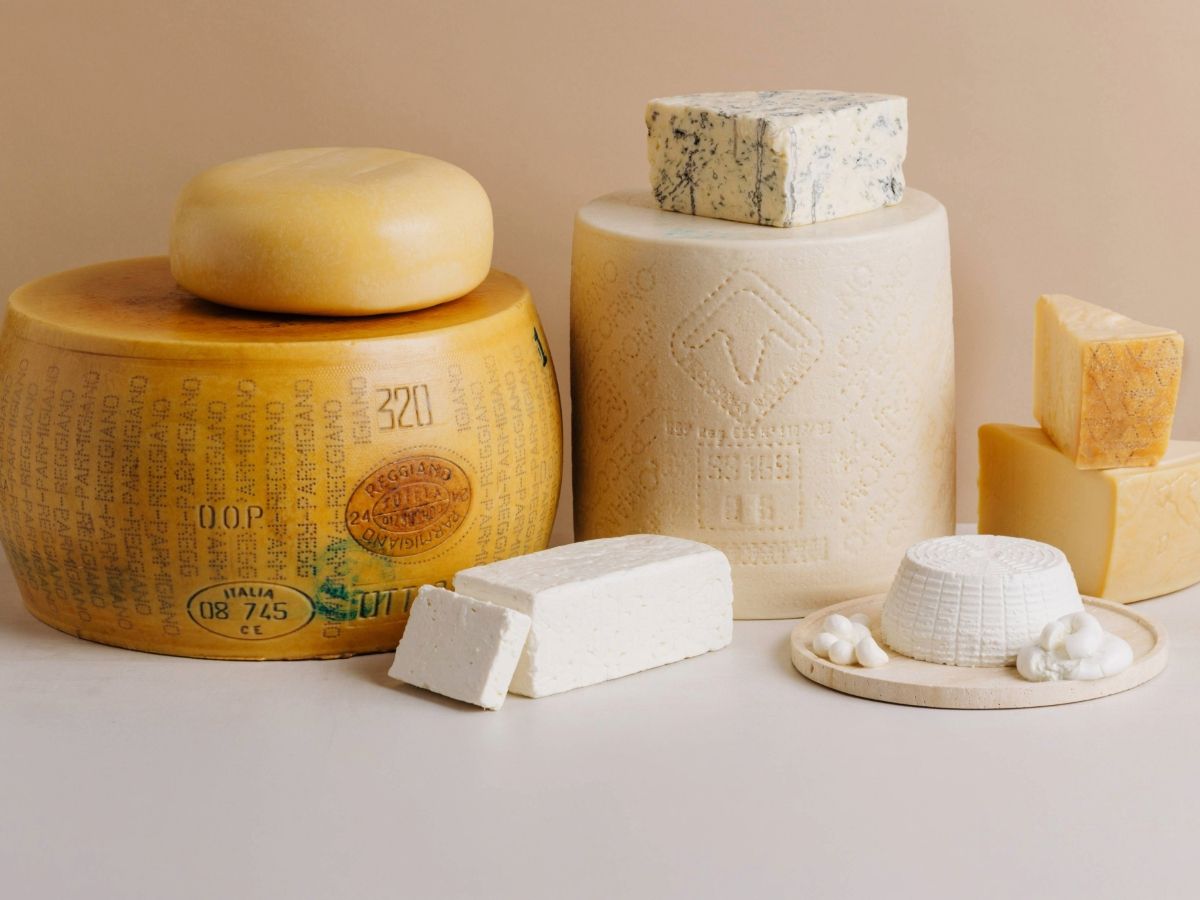
The knowledge of markets acquired over time, together with more than 45 years of experience in the dairy sector, enables DalterFood Group to promote Italian dairy culture through a broad and diversified product portfolio. At the heart of the offering is Parmigiano Reggiano PDO, produced in the Group's own dairies, Colline del Cigarello e Canossa and Colline di Selvapiana e Canossa, where production reached an annual record average of 2025 250 wheels per day, confirming the strategic role of this outstanding product in the Group's growth.
Alongside this PDO speciality is a selection of Italian hard and fresh cheeses, including Grana Padano PDO, Pecorino Romano PDO, mozzarella and burrata, produced by trusted partners.
Environmental impact
In 2025, DalterFood Group continues to invest in energy efficiency and self-generation from renewable sources. Electricity consumption reached 14.712 GJ, 8% higher than in 2024, following the increase in production. At the same time, the commissioning of the new photovoltaic systems at the Caseificio del Cigarello e Canossa and the Sant'Ilario d'Enza cutting and packaging plant, together with the system already operational since 2024 at the Caseificio Colline di Selvapiana e Canossa, made it possible to self-generate 20% of the electricity consumed by the Group.
This work is accompanied by an increasingly detailed understanding of the Group's climate footprint. In 2025, direct Scope 1 emissions increased by approximately 5%, while indirect Scope 2 location-based emissions decreased by 14%.
Monitoring the carbon footprint also extends to the Group's upstream and downstream activities. Since 2022, DalterFood Group has pursued a process of progressively expanding emissions measurement, including those generated along the value chain and through its business relationships. In 2025, Scope 3 emissions amounted to 264.396 tCO2e, 6% higher than in 2024. The most significant component remains the “purchased goods and services” category, which accounts for 70,73% of total emissions: understanding where the impact is concentrated along the supply chain makes it possible to identify priority areas for action more precisely and create an operational basis for guiding reduction measures and strengthening dialogue with suppliers, customers and logistics partners.
The focus on resource efficiency is also reflected in the management of materials and logistics. In terms of packaging, DalterFood Group is engaged in projects focused on recyclability and the use of recycled material. In 2025, the latter accounted for 85% of the corrugated cardboard and 9% of the plastic packaging used by the Group. Particular attention is also paid to optimising the number of packs per carton, their arrangement on pallets and the distribution of load volumes. Addressing these aspects makes it possible to use materials and transport capacity more efficiently, improving the movement of products along the distribution chain.
This commitment is also translated into initiatives dedicated to waste management, recovery and reuse. Separate collection systems, including compactors for plastic and cardboard and large sacks for PE mono-material, make it possible to separate waste in production areas and offices, encouraging an increase in the proportion sent for recovery and reuse.
The reuse principle is also applied to pallet management: since 2020, DalterFood Group has been part of the Chep circuit, which enables pallets already in circulation to be used, limiting the need for new pallets. The Chep circuit includes 70% of wooden pallets and 30% of plastic pallets.
In 2025, the Group also joined Eso's “Back to Work” project, through which no-longer-usable gloves and safety shoes are collected and sent for recovery, to be transformed into secondary raw material for producing flooring materials for gyms and play areas.
People
Business growth is accompanied by organisational growth. In 2025, DalterFood Group reached 202 employees, compared with 189 in 2024, with 92,6% of contracts being permanent. During 33 new people were hired, of whom 39,2% were under 30 years old.
Investment in training is increasing: in 2025, hours per person rose to 32, +18,5% compared with 2024, confirming the central importance of skills development in the growth of the Group and its people. The programmes carried out also included one dedicated to artificial intelligence, with the aim of developing suitable preparation to address future challenges, strengthen competitiveness in the market and promote a corporate culture open to change and professional growth.
Valuing people also involves promoting well-being, inclusion and equal opportunities, with the aim of strengthening a culture of non-discrimination and promoting a respectful and welcoming working environment for everyone. In this area, the parent company Dalter Alimentari is pursuing a structured programme for gender equality, including a dedicated Committee, a review of HR processes and training activities on inclusive language. In September 2026, this process led to the certification under Uni/PdR 125:2022 being confirmed for the third consecutive year, maintaining a commitment in which measurement and verification provide tools for assessing progress and identifying areas for improvement.
This perspective also includes initiatives dedicated to health and prevention, including meetings held with doctors from Lilt in Reggio Emilia, designed to raise awareness among the Group's people of the importance of prevention and healthy lifestyles.
Links with and support for local areas
For DalterFood Group, protecting the Reggio Emilia Apennines is a strategic priority. In a fragile area affected by depopulation, the Group has developed a Parmigiano Reggiano supply-chain model that enhances small producers and supports their continuity. In this context, the company has built relationships of collaboration and trust with local farmers over time.
The journey reflects a significant evolution: from the 5 farms that in 2009 supplied milk daily to the first dairy acquired by the Group, Colline di Selvapiana e Canossa, DalterFood Group now works with 52 farmers, who supply more than 110.000 litres of milk per day. This evolution demonstrates the importance of building solid, ongoing relationships based on shared objectives concerning milk quality and compliance with the standards required by the market and customers.
The partnership with farmers thus has a value that goes beyond sourcing raw materials: it means strengthening a network of agricultural businesses rooted in the Reggio Emilia Apennines and helping to preserve a productive heritage, expertise and knowledge closely connected to the area and to the production of one of Italy's leading dairy specialities.
Closeness to local communities is also expressed through projects in the social, healthcare, educational and sporting fields. Supported initiatives include the purchase of a new-generation ultrasound scanner for the Radiology department of Franchini Hospital in Montecchio (Reggio Emilia), while support continues for the minibasketball teams of Asd Lg Competition Castelnovo ne' Monti and for promoting work-study programmes and university internships. In Germany, the Group supports Schwäbische Tafel Stuttgart Ev, donating products no longer suitable for sale but still fit for consumption, in support of the association's activities for people in difficulty.
New objectives and recognition
The matters described in the sustainability report continue through developments in 2026, which mark further progress in the path undertaken by the Group. These include the validation by the Science Based Targets initiative (Sbti) of DalterFood Group's Near-Term Targets. Compared with the base year 2023, the Group undertakes to reduce Scope 1 and Scope 2 emissions by 2033 by 54,6%, and by the same percentage the Scope 3 emissions relating to the most significant categories of its business.
In 2026, the Group also obtained the EcoVadis Bronze Medal for the fourth consecutive year, as part of the assessment of corporate performance in the areas of environment, ethics, labour and human rights, and sustainable procurement. This reconfirmation forms part of a process of progressively structuring and measuring corporate practices across the various areas of sustainability and provides an additional reference point for identifying the areas in which work should continue.
The comment
“The sustainability report 2025 represents for us the result of a journey that we have progressively consolidated over the years and of a shared effort involving the Group's various functions. Reporting also means taking responsibility for sharing clear and concrete information with customers, partners and stakeholders about our journey and the results achieved. In this regard, Deloitte's limited assurance engagement represents an important step: it introduces an additional level of independent verification and strengthens the reliability of the information we make available to our stakeholders. The data for 2025 reflect the evolution of a Group that continues to grow, while simultaneously strengthening its structure and commitment to the environment. Exceeding 200 million euros in turnover demonstrates the solidity of our development path, while the growth in headcount, which has reached 202 employees, reflects an organisation that evolves alongside the business and continues to invest in people and skills. On the environmental front, self-generating 20% of the electricity consumed by the Group, thanks to the photovoltaic systems operating at our three production plants, represents a concrete result of the path undertaken to increase the use of self-generated energy from photovoltaic systems,” says Antonio Gizzi, general manager of DalterFood Group.
This article was translated from the original Italian version with the assistance of artificial intelligence. In case of discrepancies, please refer to the original Italian version.