Shrinkflation: 73% of Italian consumers notice it

Shrinkflation: 73% of Italian consumers notice it
- Information
The product gets smaller, the spending remains unchanged—a mean old trick. But shrinkflation, or downsizing, no longer goes unnoticed.
And this is despite the fact that much has been done to keep it well protected. Or rather, not done, given that in Europe practically only France currently has a precise regulation on the matter.
They do not have one, however: the United Kingdom and Spain, while in Germany they skirt around the issue, penalising misleading packaging, for example with empty spaces exceeding 30 per cent.
In Italy, downsizing ends up in the cupboard
In France, from July 2024, supermarkets larger than 400 sq m must indicate, for two consecutive months and with special signs, reductions in the size of goods not accompanied by corresponding price reductions.
Here, the matter is being postponed, partly because of the EU's rejection, which considered the possible Italian framework detrimental to the free movement regime. A highly debatable rejection which, moreover, suited many people.
So, while the Competition Law of 2024 had attempted to impose, by July 2025, a declaration on the label, for a period of 6 months, of shrinkflation practices, everything was postponed—more than once—to end up in July 2026.
How to react to shrinkflation
On the other hand, our consumers are not exactly… “distracted”. According to data released a few days ago by the Observatory of Pro Carton, the European association of paperboard and cartonboard manufacturers, 7 out of 10 (73%) Italians say they are aware of the phenomenon.
The survey, conducted in 2026 among more than 5.000 people in five countries—alongside ours, namely the United Kingdom, France, Germany and Spain—captures a significant change of pace: greater attention to “lightened” packaging translates into more selective purchasing choices, with end customers willing to reward brands that guarantee transparency, clear information and accuracy in product communications.
A deeper understanding of downsizing translates into precise choices and contributes, for its part, to redefining consumption patterns.
If a commonly used product reduced its quantity or dimensions without any price changes, the 84% of respondents said they would react by taking action against the brand.
Among the preferred measures—with the option to choose more than one—the search for an alternative with a fair quality-to-price ratio, switching to another brand and the decision to stop buying that product altogether emerge.
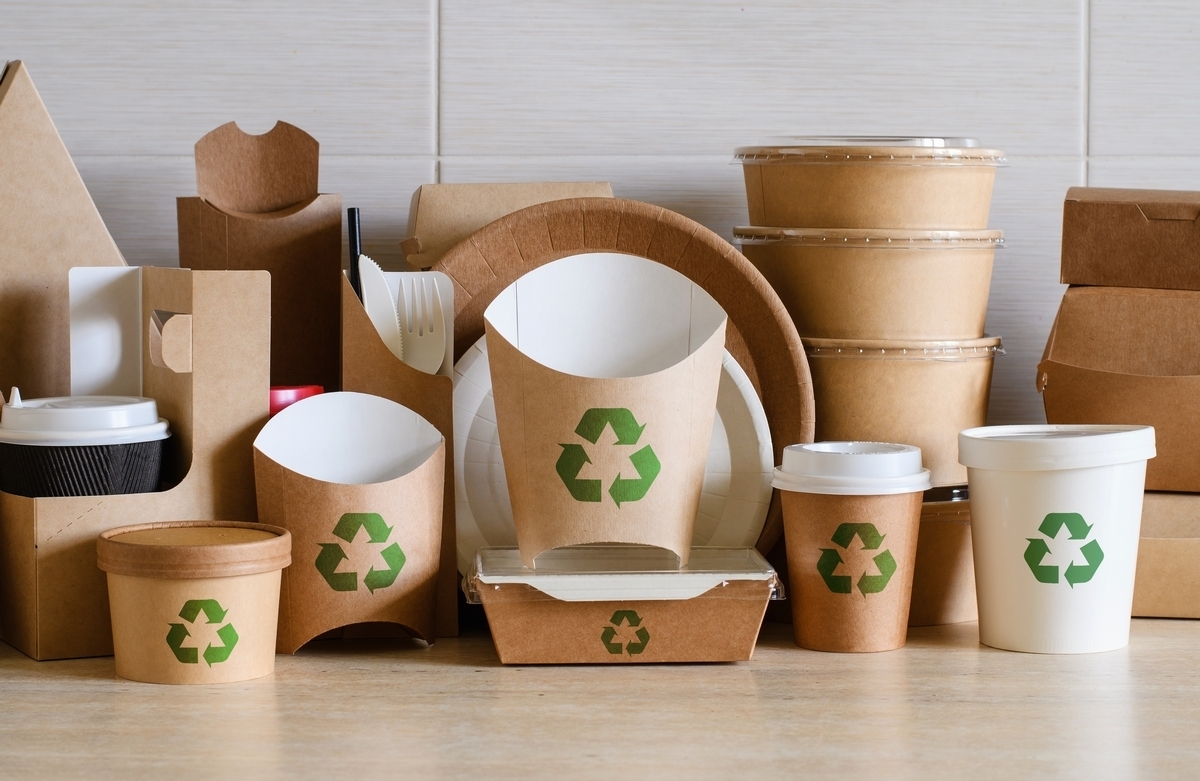
Recyclability is the new normal for packaging
These decisions, in turn, form part of a general scenario in which, despite uncertainty and increased attention to price, the role of packaging is becoming increasingly important, given that 56% of respondents say they have become more sensitive to the issue of climate change over the past twelve months.
Indeed, more than half of Italians say no to non-recyclable packaging. If downsizing causes serious reactions, it is in fact attention to sustainability that remains central, provided, however, that it does not entail a price increase. Nevertheless, opposing this selfish, widespread and generalised criterion is a 27% of people who say they are willing to look beyond cost considerations.
And among respondents who changed brand or product because of the packaging, 57% said they did so precisely because the packaging was not recyclable.
88% of our fellow citizens also say that they consider—if not always, then at least “sometimes”—the environmental impact in their choices of packaged products.
A figure that exceeds the European average by 3 percentage points, confirming our country's more consistent attention to environmental issues and demonstrating that sustainable packaging is becoming the new normal: for 8 people out of 10, it positively influences their choice of brand.
This article was translated from the original Italian version with the assistance of artificial intelligence. In case of discrepancies, please refer to the original Italian version.