
Summer sales end August with a decline of 2,6% in value
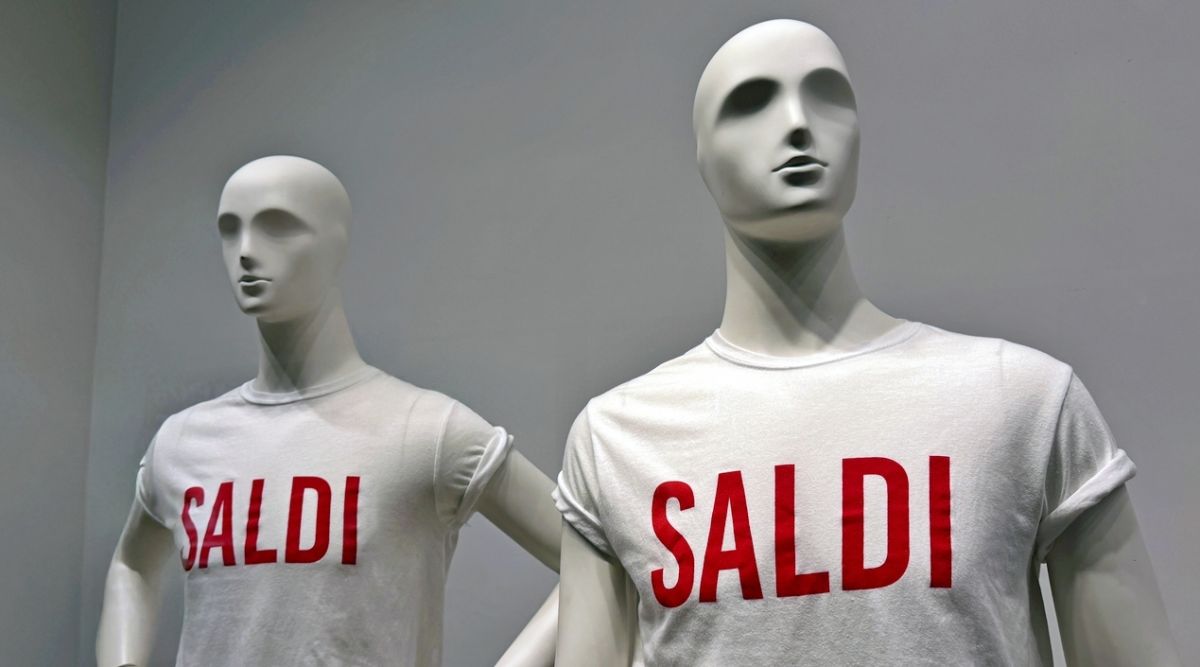
Summer sales end August with a decline of 2,6% in value
- Information
Starting on 4 July and ending, depending on the region, between 15 August and 1 September, summer sales take stock. The balance in decline comes as no surprise.
Factors such as the desire to save play a part, as does the abundance of many other promotions throughout the year.
For the sake of accuracy, it should be said that in some areas, Sicily and Friuli-Venezia Giulia, the event has not yet ended and continues, respectively, until 15 and 30 of the current month.
Federmoda-Confcommercio: the good start to the summer sales does not reverse the trend
According to Federazione Moda Italia-Confcommercio, after an encouraging start, the discount season gradually lost momentum, ending August with an average fall in sales of 2,6% in value compared with the same month of 2025.
The monitoring, carried out among the member businesses that responded to the questionnaire, shows that the situation nevertheless remains complex: 55% recorded stable purchases (37%), or an increase (18%), while 45% experienced a decrease.
“The good start was not enough to reverse a trend that continues to penalise local retail in the sector,” comments Giulio Felloni, president of Federazione Moda Italia-Confcommercio. “The problem is not the sales, but weak consumer spending and increasingly difficult market conditions for independent shops, amid rising operating and energy costs, reduced margins and unbalanced competition. The exceptional heat also held back demand. Without concrete measures, there is a risk of a new acceleration of the hollowing-out process.”
Can the costs faced by small shops and market imbalances lead to further hollowing-out?
Fismo Confesercenti Veneto Centrale gives consumers a voice
Further observations come from Fismo Confesercenti Veneto Centrale, which speaks of a substantial resilience, but without enthusiasm.
For this source, not only was a lacklustre start observed among members, but 67% of operators recorded lower footfall than in the same period last year, with a fall in takings estimated at around 10 per cent.
Total spending was concentrated in the lower ranges: most people spent less than 50 euros, and between 100 and 199 euros.
A survey conducted among the area's consumers nevertheless shows that 73,1% of respondents made purchases during the sales season, confirming the public's loyalty to this seasonal appointment.
The assessment of the value for money offered by the discounts nevertheless remains cautious: 60% describes them as ‘average’ compared with expectations, and only one person in eight considers them ‘very good value’.
The most active public during the summer sales was concentrated in the middle age groups: 38,5% are aged between 45 and 54 years, and 30,8% between 55 and 64. They are followed by those in their 35-44s (19,2%) and the over-65 s (7,7%); the presence of under-35 s was marginal.
As regards habits, only 19,2% take advantage of the sales ‘every season’, while the majority experience them more selectively: 38,5% attend them occasionally and 26,9% rarely. 11,5%, on the other hand, say they often make purchases.
Despite the growth of e-commerce, the local shop remained the preferred channel: 73,1% of shoppers mainly used physical outlets, 19,2% combined physical and online shopping, while a residual share used e-commerce exclusively.
Women's clothing continues to lead the sales rankings
Among the most popular product categories, women's clothing stands out, leading the rankings with 56% of preferences, followed by footwear (44%) and men's clothing (32%). Further behind are children's clothing (12%), accessories and perfumery/cosmetics (8% each), while household items, swimwear and household linen account for marginal shares, at around 4 per cent.
When asked about the main reason for purchasing, 52% of respondents cite lower prices, followed by the need to buy specific products (20%) and particularly attractive promotions (16%).
Only 12% admit to impulse spending. According to Fismo Confesercenti Veneto Centrale, this shows that consumers are increasingly rational and attentive to value for money, and little inclined to be guided by emotion.
Total expenditure, respondents confirm, was concentrated in the lower ranges: 34,6% of respondents spent less than 50 euros and an identical share between 100 and 199 euros; 11,5% fell both within the 50-99-euro range and the 200-399-euro range, while 7,7% allocated between 400 and 599 euros.
Consistently, 40% said that the discount had influenced their purchasing decision ‘quite a lot’, 20% ‘a little’, while the extreme positions (‘very much’ and ‘a lot’) each attracted 16%.
Asked about the comparison with previous editions, 88% of respondents judged the summer sales 2026 in line with previous years, indicating a perceived substantial stability rather than a change of direction, either way.
Among the suggestions for future editions, some called for promotions to be limited during the season preceding the actual sales, so as not to compromise their appeal, and for consideration to be given to moving the period towards the end of the season.
This article was translated from the original Italian version with the assistance of artificial intelligence. In case of discrepancies, please refer to the original Italian version.