
WEEE and batteries: recovering them from residual waste costs up to 2,9 million per plant
WEEE and batteries: recovering them from residual waste costs up to 2,9 million per plant
- Information
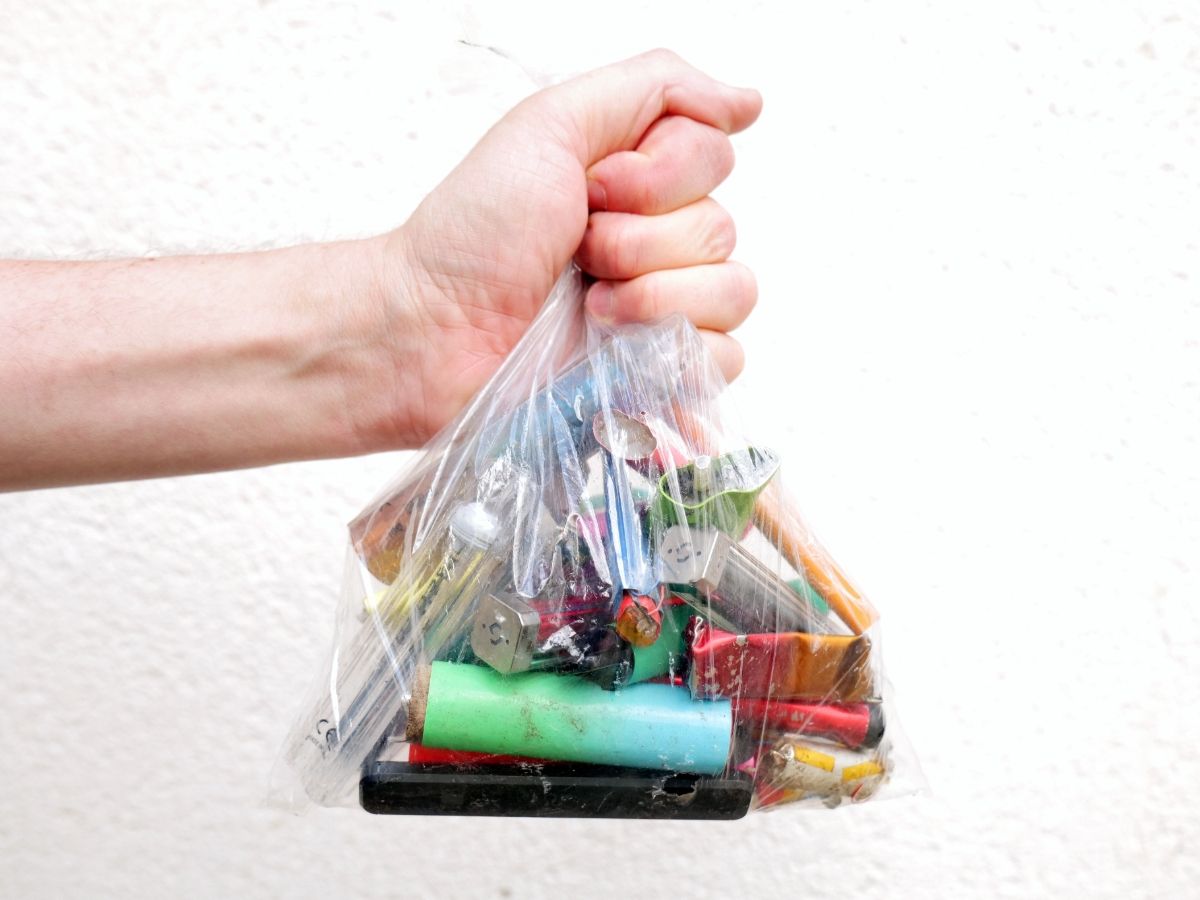
A study conducted by Erion Energy, Erion Weee and the Department of Mechanical Engineering of the Polytechnic University of Milan has demonstrated that it is technically possible to intercept and separate WEEE and batteries incorrectly disposed of among residual municipal waste (RMW), but significant investment would be required.
According to the study, entitled “Solutions for the removal of battery waste and small WEEE from residual waste: technologies, costs and drivers” and presented at the Leonardo da Vinci National Museum of Science and Technology in Milan during the event “Batteries and small WEEE in residual waste: can technology close the collection gap?”, removing this waste from the residual waste stream would achieve a twofold objective: recover critical raw materials, which would otherwise be incinerated or lost in landfill, and improve plant safety, since lithium batteries present in Residual Municipal Waste (RMW) can cause fires to start during treatment operations.
The case study
To assess the feasibility of the intervention, the study used the plant operated by Ecologia Viterbo as its reference case. This is one of the most important operators involved in RMW treatment in central Italy. The study simulated the integration of technological solutions based on bag-opening, X-ray scanners, robots for automatic identification and separation. The analysis confirms that removing spent batteries and small WEEE from the residual waste stream is technically feasible, but requires significant investment.
The investment
Introducing the technologies required in mechanical-biological treatment (MBT) plants for RMW would in fact require an investment of between 1,5 and 2,9 million euros per plant, depending on the level of automation adopted. Assuming implementation at the main 60 MBT plants (which cover 80% of the RMW stream generated annually in Italy), the total investment would be between 65 and 114 million euros.
Although this figure is relatively modest in relation to the overall economic size of the municipal waste sector in our country, this type of investment presents a structural problem: it does not generate sufficient revenue to cover its depreciation independently and consequently is not profitable in itself under the current tariff framework for RMW management.
The necessary measures
The study identified which external policy instruments could be implemented to make the introduction of technologies for intercepting and separating battery waste and small WEEE at MBT plants sustainable.
One possible instrument could be direct public incentives (national or regional calls for applications, or grants) to encourage the installation of the new technologies. However, incentivised investment entails a misalignment of incentives between the funder and the operator, since the latter may be encouraged to install the equipment in order to access the funding, without having a genuine strategic interest in its continued operation; the risk is therefore that of creating one-off plants that are operational only nominally.
More effective, however, would be the introduction of a regulatory obligation requiring spent batteries and small WEEE to be intercepted at all MBT plants. In this way, the investment would gradually be incorporated into the plants’ economic and financial plans and into service-procurement tenders, ensuring uniform conditions among operators, avoiding competitive distortions and promoting the widespread deployment of the technologies throughout the country.
The comments
“The technologies currently available make it possible to intercept a significant proportion of battery waste and small WEEE even after citizens have incorrectly disposed of them with residual waste,” says Laura Castelli, General Manager of Erion Energy. “However, these systems must be considered a complementary solution, not a replacement for dedicated collection. The priority remains promoting correct behaviour among citizens and making collection points increasingly widespread and accessible.”
“The study once again highlights how the waste sector needs a strategic vision and policy instruments consistent with that strategic vision,” says Giorgio Arienti, General Manager of Erion Weee. “The ‘free market’ alone is not heading in the right direction: appropriate regulatory instruments can enable the country to make significant progress in recycling critical raw materials.”
“The growing presence of batteries in residual waste poses a new challenge: developing technologies capable of recognising and automatically separating them, turning an environmental problem into an opportunity for recovery and valorisation,” stresses Marcello Colledani, professor at the Polytechnic University of Milan – Department of Mechanical Engineering. “The solution combines sensors based on X-ray and optical technology, artificial intelligence and robotic systems, paving the way for a more efficient, sustainable and advanced industrial application in battery recovery.”
This article was translated from the original Italian version with the assistance of artificial intelligence. In case of discrepancies, please refer to the original Italian version.