Prize draws, lotteries and public gambling: where the boundary lies for shoppers
Prize draws, lotteries and public gambling: where the boundary lies for shoppers
- Information
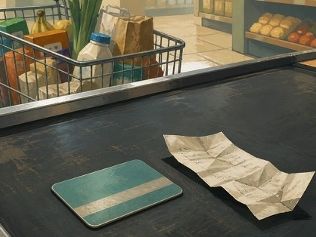
At a supermarket checkout, on the same morning, a customer may encounter three different forms of prize: the prize-draw token credited to the loyalty card, the receipt paid for by debit card that enters the receipt lottery draws, and the scratchcard sold at the tobacconist’s counter near the exit.
To the customer, they are all chances to win; in law, they are three separate worlds. And for those designing promotions in modern retail, that boundary matters more than it might seem.
Prize draws: what the DPR 430/2001 provides
Prize draws and prize promotions are governed by the DPR 26 October 2001, no. 430. A prize draw leaves the win to chance or skill. A prize promotion, on the other hand, rewards those who reach a spending threshold, as happens with points-collection schemes. In both cases, participation begins by buying a product or service: no one pays for the right to play.
The rules are strict. The promoter informs the Ministry of Enterprises and Made in Italy at least fifteen days before the launch and pays a deposit equal to 100% of the prize pool, falling to 20% for prize promotions. Prizes may be goods, services, discounts or vouchers, never money, securities or fund units. Prizes that are not claimed or allocated go to a ONLUS named in the rules.
When you pay to play, it is no longer a promotion
The boundary is drawn by a provision of 1948, Legislative Decree no. 496: games that require a monetary stake and promise a prize are reserved to the State. This is where public gambling comes from, from Lotto and instant lotteries to betting, operated under concession and prohibited to minors. The same DPR 430, in Article 8, prohibits schemes designed to circumvent this state monopoly, for example when the price charged to the customer exceeds the commercial value of the goods.
A discount voucher and a lottery ticket may end up in the same shopping bag, but they follow two different principles. In the first case, participation comes from buying a product; in the second, you pay to play. Anyone on this second side who wants to check a website before registering and depositing money can start with the guides to safe gambling on Truffa.net, which review gambling websites and flag the most frequent scams. Altroconsumo provides practical information sheets for consumers on online scams, while Federconsumatori offers assistance through its local offices.
The economic importance of the distinction is far from marginal. According to the Blue Book of the Customs and Monopolies Agency, in 2024 Italians’ spending on gambling—that is, the amount staked after deducting winnings—was 21,55 billion euros. Of this, 16,48 billion passed through the physical network, which customers also encounter in shopping centres.
Receipt lottery and instant win: when a promotion imitates gambling
The receipt lottery is a special case. It is a free state lottery created to encourage electronic payments. The adult customer shows the lottery code at the checkout, pays by card or app and enters the draws. Each month, ten prizes of 100.000 euros are drawn for shoppers and ten prizes of 20.000 euros for retailers. For the shop, this means up-to-date electronic tills and staff able to explain how it works.
Meanwhile, retailers’ promotions are increasingly borrowing the language of gambling. The SuperPrizeDraw with which Decò celebrates its 20 years, running until 1 November, awards a “game token” for every 20 euros spent with a loyalty card. The token is used in the app to discover immediately whether it has won, from a prize pool of more than 1,2 million euros. It is an instant win in every respect, but remains a prize draw: the token is obtained through spending, not bought.
What retailers should bear in mind
It is precisely the resemblance to gambling that makes transparency a competitive advantage. Clear, easy-to-find rules, the declared prize pool and beneficiary ONLUS, and the draw dates displayed at the checkout: these are the elements that distinguish a promotion from something the customer perceives as a bet.
The penalties, moreover, are far from symbolic. A prize draw launched without notification costs from 2.065,83 to 10.329,14 euros. A prohibited scheme incurs between one and three times the VAT due on the prize pool, with a minimum of 2.582,28 euros. Procedures and forms for notification are collected in the prize promotions section of the Ministry of Enterprises and Made in Italy’s website.
This fits into a broader focus on the accuracy of communications to consumers. The reform of the Consumer Code in force since 27 September assigned the supervision of the new rules to the AGCM, with violations classified as unfair commercial practices. For retailers, the checklist is short: rules published, beneficiary ONLUS declared, notification sent to the Ministry within the deadline.
This is the same point highlighted by Giovanni Arena, president of Decò Italia, when presenting the retailer’s twentieth anniversary: “Decò has grown by keeping the customer at the centre and building a relationship with families based on trust, value for money and quality.”
This article was translated from the original Italian version with the assistance of artificial intelligence. In case of discrepancies, please refer to the original Italian version.