Prosecco Doc: in the first half of 2026 the Chinese market records a record leap (+30%)
Prosecco Doc: in the first half of 2026 the Chinese market records a record leap (+30%)
- Information
According to data released by the Consortium for the Protection of Prosecco Doc, in the first six months of 2026 the Chinese market recorded a record leap for the designation.
Economic data
In the first half of 2026, Prosecco Doc achieved growth of over 30% compared with the same period of the previous year. China currently absorbs approximately 1 million bottles a year (equivalent to 0,2% of the designation’s total export share), representing a strategic market with steady development potential.
The sales data in China form part of the overall picture of a world-leading designation: spanning Veneto and Friuli-Venezia Giulia (with 12.322 winegrowers, 1.110 winemaking companies and 350 sparkling-wine producers), Prosecco Doc achieved in 2025 an annual production of 667 million bottles and an estimated consumer value of 3,6 billion euros.
The comment
Commenting on the economic performance and the impact of the initiatives in Beijing is Giancarlo Guidolin, president of the Consortium for the Protection of Prosecco Doc: "Prosecco DOC is now an ambassador for the Italian lifestyle around the world, and the success of these masterclasses provides further confirmation. The Chinese market, which in the first half of 2026 recorded an excellent +30%, offers us a new perspective on a context in which our designation aims to grow with respect, curiosity and a long-term vision. Prosecco Doc speaks a universal language, one of joy and conviviality: seeing it reinterpreted by young Chinese people with such freshness confirms to us that cultural dialogue is the right path. When wine is authentic and connected to a territory, it knows how to build bridges between cultures. These results provide concrete encouragement for our future promotional strategies, and we thank Uibe, Blcu and David Cheng for making this dialogue possible".
Youth creativity and Italian culture in Beijing
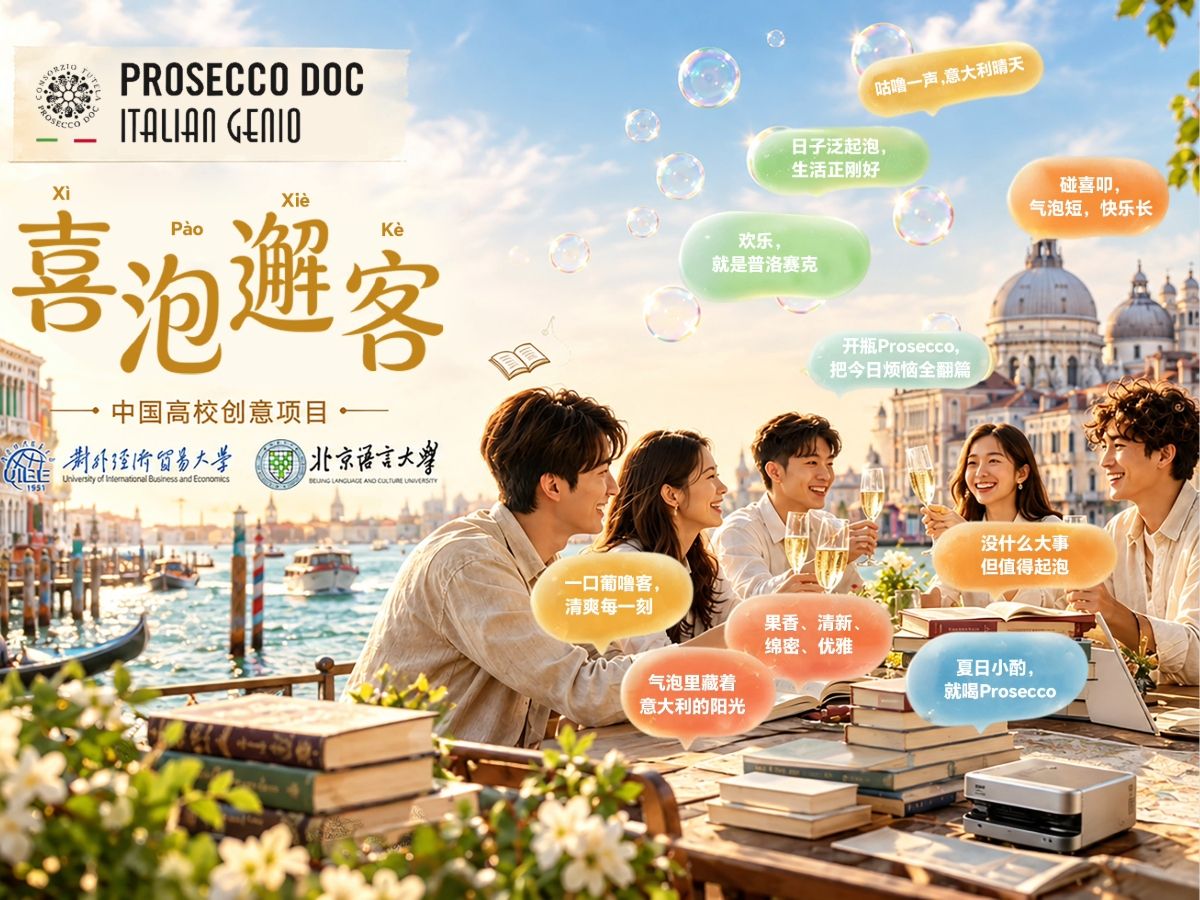
This growth scenario includes the initiative promoted by the Consortium in collaboration with the University of International Business and Economics (Uibe) and the Beijing Language and Culture University (Blcu). Two masterclasses led by Ais sommelier David Cheng guided more than one hundred students in discovering the history of the designation, the Martinotti Method, tasting and mixology with the classic Spritz.
During the seminars, selections from 13 wineries representing the designation were tasted: Borgo Molino, Bosco del Merlo, Bottega, Brilla!, Cantina Trevigiana, De Stefani, La Gioiosa, Masottina, Martellozzo, Paladin, Piera 1899, Tenuta Sant'Anna and Valdo.
The event saw the young Chinese students engage in reinterpreting the brand:
- Evocative translation of the name: proposals for Chinese characters based on concepts of joy, effervescence and conviviality through the encounter with the "guest arriving from afar", namely Prosecco Doc.
- Promotional strategies: from collaborations with TV programmes dedicated to wellness and the slow lifestyle, to involving local testimonials, as well as co-branding projects inspired by the guochao phenomenon, the trend of highlighting products and languages capable of reinterpreting Chinese cultural identity in a contemporary way, through to consumption during afternoon relaxation.
These wordplays not only make the name more immediate and appealing to the Chinese public, but also help construct a narrative rich in meaning, in which Prosecco becomes the protagonist of the table and festive occasions, bringing with it values of hospitality, joy and sociability.
As highlighted by lecturers Wang Ying (Uibe) and Zhang Yuan (Blcu), the project demonstrated how Italian food and wine aesthetics and culture can bring different worlds together, providing the Consortium with concrete ideas for future campaigns to position Prosecco Doc in China.
This article was translated from the original Italian version with the assistance of artificial intelligence. In case of discrepancies, please refer to the original Italian version.