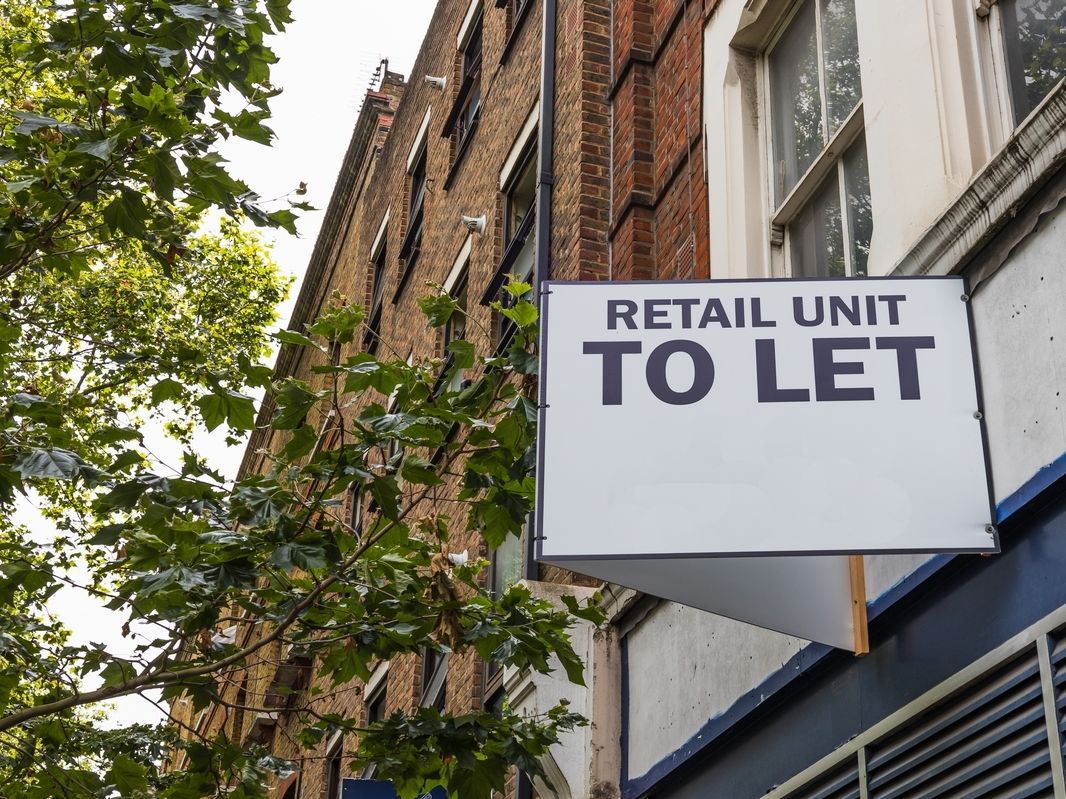
In 2025-2026, vacant shops are almost 460.000 (17% of the retail offering)
In 2025-2026, vacant shops are almost 460.000 (17% of the retail offering)
- Information
In 2026, in Italy, just 36,6% of retail outlets are owned. Thus, only one entrepreneur in three, or slightly more, owns the premises they use.
Consequently, the remaining 63,4% operate from rented premises and remain exposed to [[ARTW_HTMLOPEN_AAAE]租al costs and property market conditions, a phenomenon that is even more widespread in the main urban areas.
Vacancy is rife in the major cities
In the eight major cities covered by the Confcommercio survey — Rome, Milan, Turin, Naples, Genoa, Palermo, Bologna and Florence — the estimated share of rented premises reaches as much as 69,8%, a difference of 6,4 percentage points compared with the national figure.
Significant differences also emerge at regional level. The estimated share of shop premises owned ranges from 31,5% in Lazio to 46,5% in Basilicata, a gap of 15 points.
The lowest percentages, after Lazio, are recorded in Campania (33,2%), Liguria and Tuscany (33,6%), while the highest ownership rates, besides the Lucanian area, are observed in Calabria (44,9%) and Molise (43,4%).
In any case, in none of the areas examined do the shops purchased by businesses account for half of the total.
According to Carlo Sangalli, president of Confcommercio: “Almost half a million vacant premises, small towns and villages without essential services, such as grocers, newsagents and pharmacies: this is the dramatic picture of commercial desertification that is advancing unstoppably, impoverishing our cities.
“For this reason,” he continues, “we are asking the Government to allocate adequate resources to municipalities to implement plans supporting local economies, with the aim of reopening vacant premises, encouraging new businesses and breathing life back into communities.”
Small non-food retail is the hardest hit
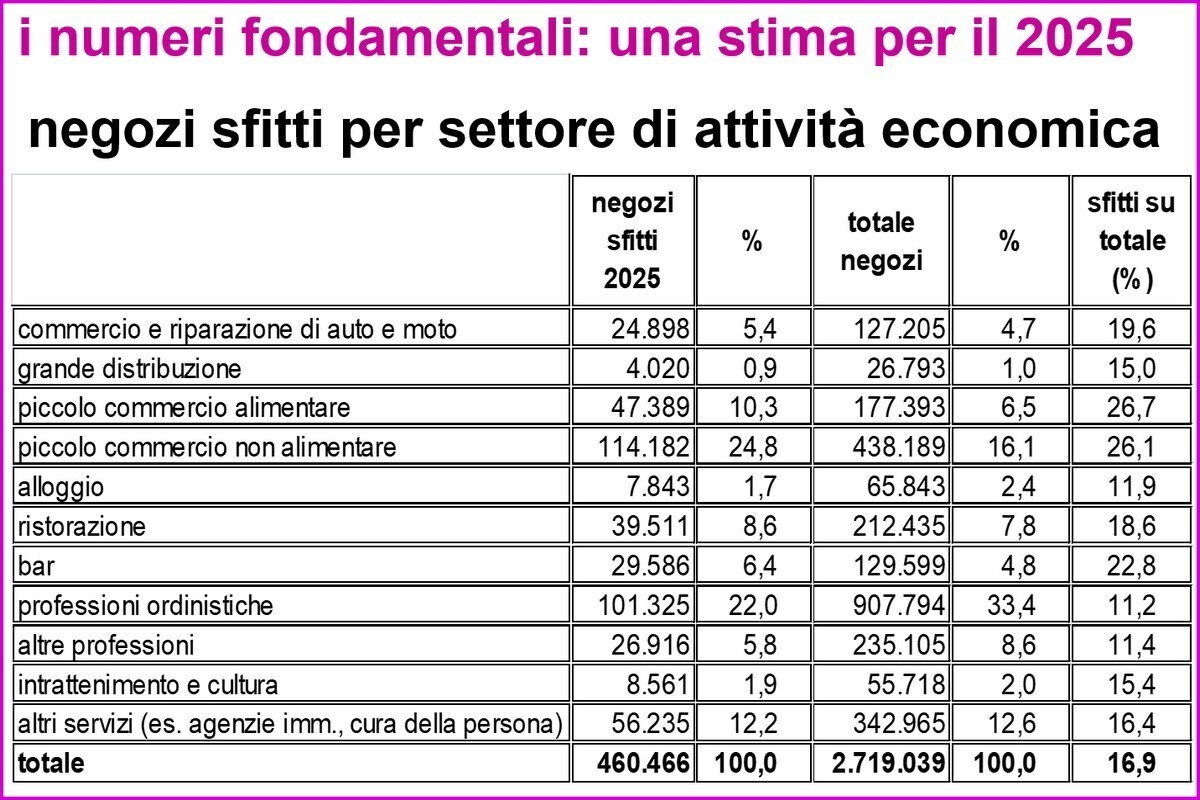
A careful review of the tables in the analysis, carried out in collaboration with the Guglielmo Tagliacarne Study Centre and based, among other things, on data from the Om Real Estate Report (Revenue Agency) and Istat’s Asia Archive, reveals that vacancy particularly affects small non-food retail (26,7% of all shops), professionals registered with the various professional bodies (22%), services, such as estate agencies and personal care services (12,2%), restaurants (8,6%) and bars (6,4%).
Confcom also reports that “assuming an average annual rent per shop of approximately 16.000 euros at 2025 prices (Omi source), each unlet property causes a loss of 116.000 euros, given that the vacancy lasted approximately 7,2 years during the period 2012-2023.
“Multiplying this figure by the number of shops currently empty produces a loss for the Italian system of approximately 53 billion euros over 11 years, equivalent to 4,4 billion per year, now equivalent to 0,2% of GDP.”
This is not all, because the phenomenon is set to persist. Confcommercio estimates that, in 2026, vacant shops across the country had reached 458.000 units, accounting for as much as 17% of the total supply of commercial premises.
The analysis, presented by Mariano Bella, director of the confederation’s Research Department, maps a structural crisis that affects the country unevenly but reveals deep-seated problems, particularly in small retail and services.
Those paying the highest price for this economic transformation are, as we have seen, small non-food retail, which alone accounts for approximately 172 thousand shuttered shopfronts, but also the restaurant and bar sectors, where almost 90 thousand empty premises are estimated.
This article was translated from the original Italian version with the assistance of artificial intelligence. In case of discrepancies, please refer to the original Italian version.