
Romagnoli F.lli: extreme heat and water scarcity reduce potato yields by up to 25%
Romagnoli F.lli: extreme heat and water scarcity reduce potato yields by up to 25%
- Information
Romagnoli F.lli has taken stock of the performance of the potato season in Italy’s main production areas, highlighting significant differences between regions, harvesting periods and production types.
After a 2025 season characterised by high product availability and consequent pressure on prices, 2026 brings greater tension on the supply front. The main factors weighing on the situation are the weather conditions that accompanied the summer months, with high temperatures, water scarcity and extreme weather events affecting the country’s main production areas and the major production regions of northern Europe in different ways.
The country’s regions
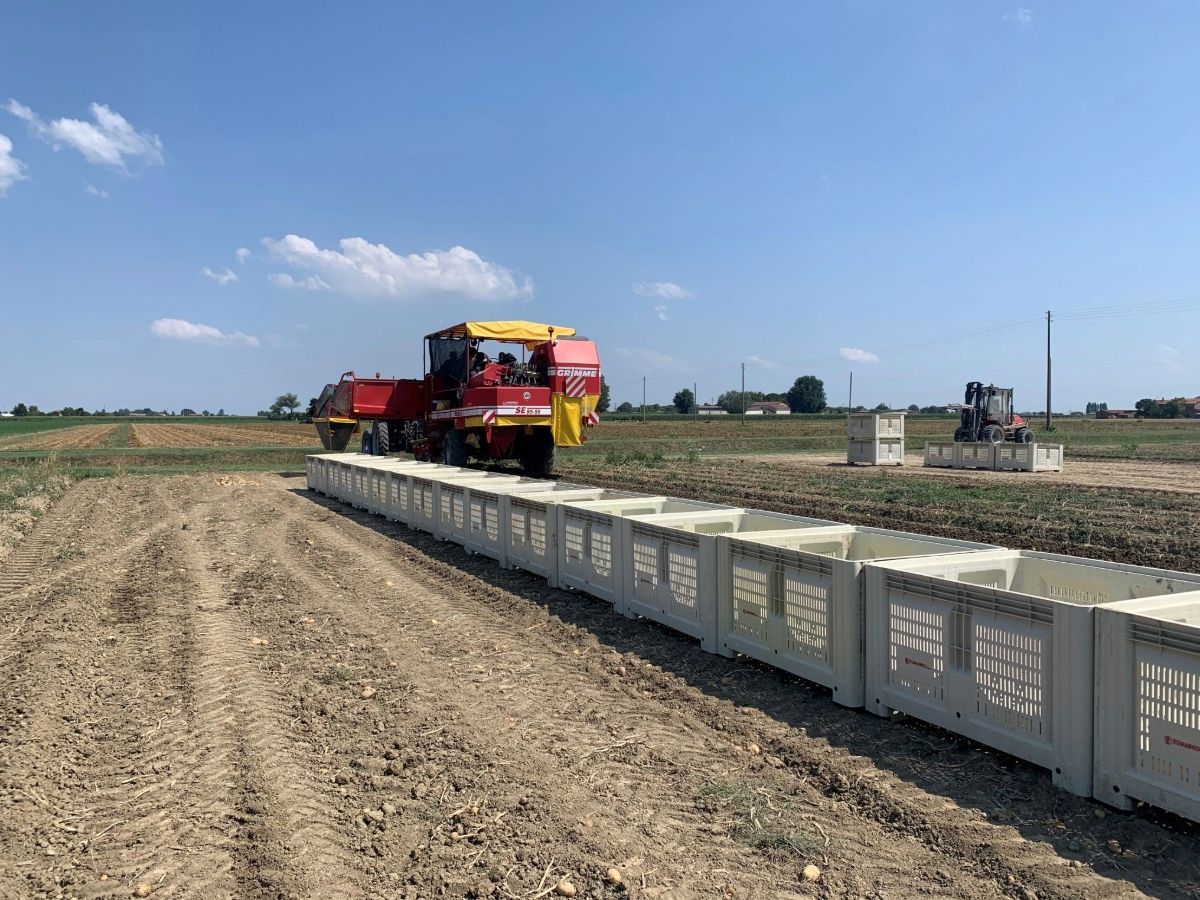
In Central Italy, the season was marked by extreme weather events. In the Fiumicino area, a tornado and strong gusts of wind forced sowing operations to be postponed, consequently affecting the harvesting calendar, which continued until the end of July, during a period already characterised by particularly high temperatures. Yields fell by approximately 15% compared with the average of recent seasons.
Northern Italy was also affected by the combined effect of high temperatures and long periods of drought. For early production, the effects were more limited, with yields falling by around 10%. The situation appears more critical for mid- to late-season production in Emilia-Romagna and Veneto, where yields fell by up to 25%.
The European context
The Italian dynamics form part of an equally complex European context. Following the reduction in cultivated areas after the overproduction of 2025, heatwaves and water deficits have further reduced yields in several producer countries in north-western Europe. The first available estimates indicate an average reduction in European production of between 15% and 20%, while in France, Unpt forecasts indicate a 23% decline in production of ware potatoes compared with 2025.
The comment
“The summer that is about to end confirms how the climate factor has now become central to planning throughout the potato supply chain, in Italy as elsewhere in Europe,” says Giulio Romagnoli, managing director of Romagnoli F.lli. “The lower yields recorded in the various national production areas, from Central Italy to the North, form part of a European context of an overall reduction in product availability. For this very reason, we are confident about market developments: lower supply, combined with the quality that our production system continues to guarantee, is supporting improving prices and dynamic commercial activity throughout the season.”
The combination of smaller cultivated areas and lower yields is therefore changing the balance between demand and supply. The consequence is already visible in commercial trends, with prices rising and greater attention being paid to product availability. The Bologna Potato Exchange has also recently highlighted a drastic reduction in availability and the need to adjust prices, including to mitigate the surge in energy and transport costs affecting the entire supply chain.
“In a context characterised by an increasingly unpredictable climate, lower yields, production risks and rising costs, it is nevertheless the duty of all supply-chain stakeholders to do everything possible to protect farm incomes,” concludes Giulio Romagnoli. “Improving prices is a positive sign, but it must not make us forget the pressure farmers are facing. Without adequate economic conditions, there is a risk that, even in the face of a more favourable market, farms will be driven to further reduce investment and the areas dedicated to potato cultivation, with consequences for future production capacity.”
This article was translated from the original Italian version with the assistance of artificial intelligence. In case of discrepancies, please refer to the original Italian version.