Vip aims to create value in the fruit and vegetable department with tailored assortments
Vip aims to create value in the fruit and vegetable department with tailored assortments
- Information
Vip, the Association of Fruit and Vegetable Cooperatives of Val Venosta, operates in one of the most established categories in the fruit and vegetable department, that of apples, but also among those currently undergoing profound change.
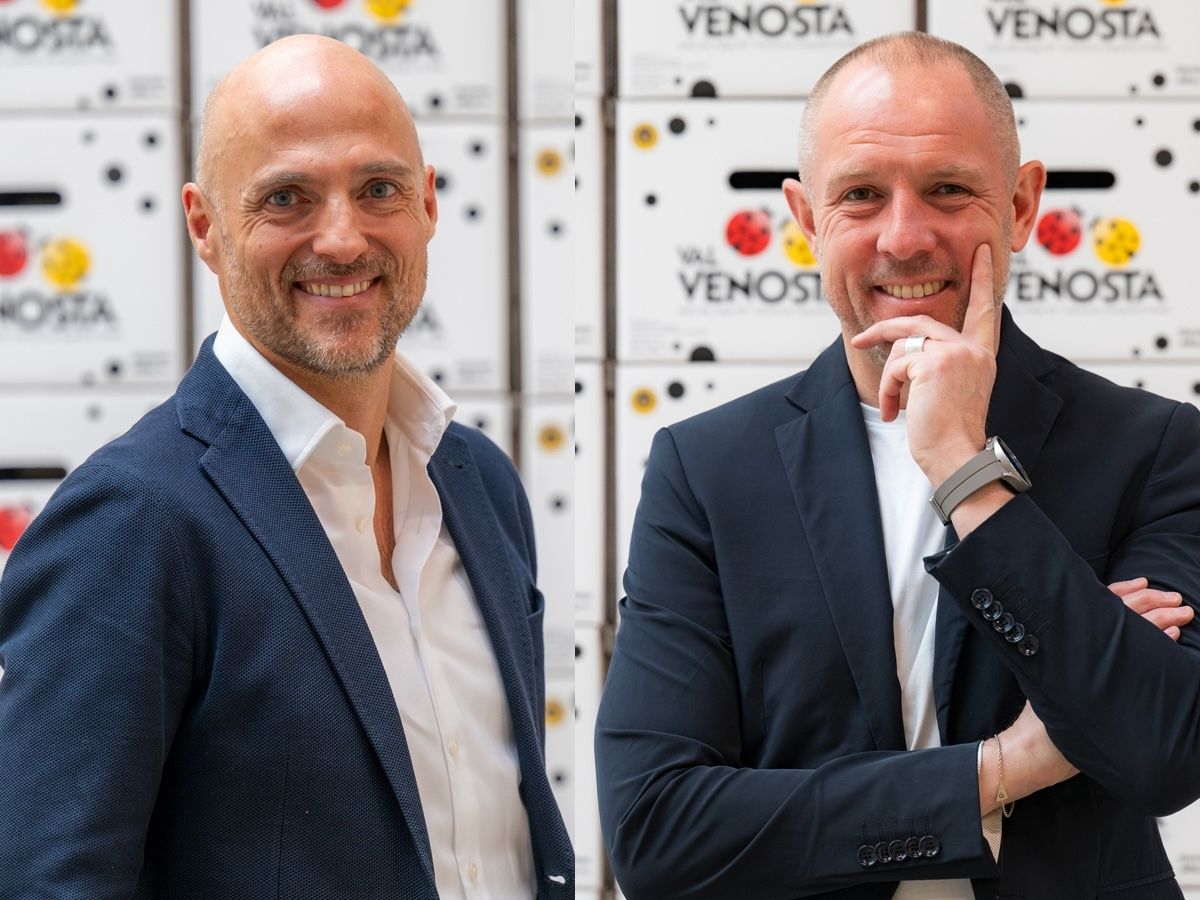
For large-scale retail, the apple is no longer merely a commodity: assortment, segmentation, service and shelf enhancement have become increasingly decisive factors. This is the context for the association’s strategy. It brings together more than 1.500 producers and aims to strengthen its role as a partner to modern retail. We discuss this with Vip’s head of marketing Benjamin Laimer and sales director Joachim Rabensteiner.
Vip defines itself as a “first class apple partner” and describes Val Venosta as an “apple paradise”: what are the concrete pillars that make this positioning distinctive today?
Val Venosta is an authentic “apple paradise” thanks to four concrete and inseparable pillars that enable us to be a true “first class apple partner” for retail. The first asset is our ideal microclimate: 300 days of sunshine a year, a constant breeze that prevents fungal diseases and significant temperature fluctuations give the apples a bright colour. This combines with the unique characteristics of our Alpine apple-growing region, where, thanks to an altitude of between 500 and 1.100 metres, our fruit enjoys slow ripening that greatly enhances its aromas. The real driving force behind the system, however, is the passion of our producers: 1.500 families cultivating small plots while combining the heritage of tradition with modern technologies. Finally, we practise natural agriculture based on the meticulous protection of biodiversity and the optimisation of water resources. It is this unique synergy between climate, altitude, the human factor and sustainability that makes our market positioning unique and inimitable. (B.L.)
The “apple paradise” project was also created as a communications platform: how has it evolved in recent years and what results has it achieved?
The “apple paradise” has also become the image, together with the claim, of our communication campaign. Seven years ago, we started with the “mini-world” to strengthen the magical aspect of the “apple paradise”. Two years ago, however, we developed a new key visual in which our producers are the protagonists. The magic remains: the apple continues to be the magical element, but is now placed in a real context made up of authentic landscapes and our farmers. The evolution lies in the transition from a world built with miniatures to a more realistic image. The values behind the apple paradise remain unchanged. (B.L.)
Vip brings together more than 1.500 producers organised in cooperatives: how much and in what way does this model affect the quality and continuity of supply?
Our cooperative model is not simply an organisational structure, but the true engine of our reliability in the market. Bringing together more than 1.500 producer families enables us to combine the meticulous care of small plots with the strength of a large, structured organisation, guaranteeing modern retail consistent volumes and uninterrupted supplies throughout the year. Quality standardisation stems from a rigorous system that starts with the land: we apply extremely strict production specifications and provide continuous agronomic advice directly in the field to every individual member. Subsequently, centralising processing in highly technologically advanced facilities – equipped with state-of-the-art optical sorting systems – enables us to calibrate, select and pack the fruit according to millimetre-precise uniformity criteria. From tree to shelf, every single apple is fully traceable, offering retailers not only an excellent product, but the certainty of a secure, transparent and industrially impeccable supply chain. (B.L.)
Sustainability is a guiding principle for your association. What are the most concrete initiatives already implemented?
For us at Vip, sustainability is an operating model that balances ecosystem protection, ethical remuneration for members and the solidity of the local economy. In environmental terms, our actions are made concrete through rigorous natural production, based on the protection of biodiversity and cutting-edge water management that preserves the resources of our Alpine region. To bridge the awareness gap among end consumers, we have chosen to abandon corporate technicalities in favour of radical, humanised transparency, driven by digital channels. At the heart of this strategy is the Farmer Life project, an editorial initiative that uses social media to eliminate the distance between field and shelf. Our own fruit growers document their real work every day via Instagram, tagging the association’s official profile. By sharing this spontaneous content, we virtually open the gates of our apple orchards to followers, showing the natural treatments, manual harvesting and daily care behind every single fruit. This approach transforms sustainability from an abstract concept into a visible and tangible experience, building deep trust based on the reality of agricultural work. (B.L.)
What makes up Vip’s portfolio and how do you build the assortment to meet the needs of distribution?
In recent years, the needs of modern retail have undergone profound change: retail is no longer simply looking for volumes and continuity of supply, but for strategic partners capable of enhancing the shelf through intelligent segmentation and genuine category innovation. Modern retail now demands dynamic assortments capable of engaging with different consumer targets and generating value in a department such as fruit and vegetables, which is often at risk of becoming commoditised. Vip’s portfolio responds precisely to this complexity by following a dual strategic path that combines the solidity of tradition with the impetus of innovation. On the one hand, we continue to support and promote traditional varieties, which remain at the heart of the market. To make the most of them and give the category new impetus, we have developed high-impact commercial projects such as Applepairing: an approach that enables us to support retailers in educating consumers, guiding them through ideal gastronomic pairings that elevate the perception of the apple from a simple fruit to a culinary ingredient. On the other hand, our offering is enriched and diversified by the latest-generation Club apples, fundamental assets for identifying new taste trends and covering premium segments. (B.L.)
What services do you develop together with retail banners?
Our “first class partner” positioning translates in practical terms into a completely tailored approach to serving retail banners, where straightforward supply gives way to genuine co-design of sales dynamics. In this value-enhancement strategy, a proprietary project such as Applepairing plays a fundamental role: by shifting the focus from the concept of a commodity to that of a premium culinary ingredient, it makes it possible to segment the shelf clearly and guide consumers towards premium choices. This is not merely about educating consumers about the product, but also about stimulating cross-selling dynamics with other departments, from the cheese counter to the wine shop, elevating the entire fruit and vegetable department. This demonstrates how introducing valuable content and emotionally engaging end customers translates directly into superior economic performance for the retail banner. (B.L.)
How did the latest campaign perform?
The past campaign was characterised by a varied situation across Europe: satisfactory harvests in the south-west, shortages in the north-east and east. The result was a lively and dynamic market from the outset. Thanks to the commitment of the growers and the work of the sales team, Vip acquired new customers and introduced new varieties onto the shelves of modern retail as well as the traditional market. (J.R.)
What about individual markets?
Our main market, Italy – which accounts for approximately 60% of our sales – as well as Spain , with a share just below 10%, are proving highly receptive to the high-quality apples grown in Val Venosta. The situation is different in Germany, where a record harvest is creating strong pressure on quantities. Nevertheless, we are managing to maintain our market shares, even though revenues are not reaching the levels of previous years. Our strategy, however, is not focused on the short term, but is based on lasting partnerships, which should always be assessed from a multi-year perspective. As in any strong relationship, it is essential to support one another in both positive and more difficult times. The performance of the Northern European markets, particularly Scandinavia and England, is also highly satisfactory; thanks to established business relationships and the high quality of the product, they continue to deliver positive results. Exports to more distant destinations have also achieved favourable results. (J.R.)
What are the main growth drivers?
The determining factors are multiple and require constant commitment, since nothing happens automatically anymore. One of the key elements of our success is undoubtedly the high quality of our apples, maintained consistently over the years. This is expressed not only in taste, but above all in the required parameters for firmness and sugar content, as well as excellent keeping quality. All this helps our partners to perceive us as reliable suppliers and problem solvers. Equally fundamental is the care devoted to strong, trust-based relationships with customers. Selling from behind a desk is not enough: personal contact remains indispensable for directly assessing the quality of the goods, tackling any challenges together and sharing news and opportunities promptly. In addition to quality and relationships, the ability to offer a complete assortment also plays a central role, enabling customers to manage the apple shelf throughout the year, with the most suitable product at every point in time. (J.R.)
How are apples performing compared with other fruit and vegetable categories?
Apples remain the best-selling fruit in Italy today and are widely consumed: available all year round, they are an everyday choice for millions of families. According to the latest market studies, consumption is particularly strong among young people under 45 years of age, attracted by new varieties that offer unprecedented taste experiences. SweeTango, Ambrosia, Envy, Cosmic Crisp and Kanzi are symbols of this evolution: crisp, juicy and surprising apples, not without reason described as “sexy apples”. (J.R.)
Is the fruit and vegetable sector under pressure from energy costs, climate and logistics?
There is no doubt that geopolitical developments have a negative impact on all players throughout the value chain, particularly those with high energy requirements, dependent on long-distance transport or essential means of production such as fertilisers. As a result, our farmers are currently facing significantly higher production costs. In addition, the cost of transporting our apples has also risen significantly in recent months. At the same time, it is difficult to pass these higher costs along the supply chain, since all players, right through to the end consumer, have faced increased costs. As far as the climate is concerned, it is clear that we too are affected by climate change. However, we are in a favourable position, being located in Europe’s highest apple-growing area. This gives us room to adapt and opportunities for expansion. (J.R.)
Are you investing in innovation?
In recent years, all of us in the apple sector have introduced new, innovative varieties to the market. Today, the challenge is to make them better known and bring them ever closer to consumers, while communicating what really makes them special. This is precisely why we are investing heavily in collaboration with our partners and customers: targeted tastings, staff training at points of sale and a broad range of b2b and b2c communication activities, from print to social media and television. We do this with conviction, because we firmly believe that we have the most compelling varieties in our hands, not only from a taste perspective. (J.R.)
What are the growth targets for 2026 in the Italian market and in modern retail?
Our main objective is to guarantee the availability for 12 months, until the new harvest, of the variety most consumed by us Italians, Golden Delicious, while always maintaining the highest quality standards. At the same time, we are working to further strengthen the market presence of our excellent red varieties, such as Gala and Fuji. Added to this are the so-called Club varieties, for which we are aiming for continuous shelf presence throughout the year, through a targeted and well-structured rotation. A particular source of satisfaction will probably be, starting with the 2027 harvest – weather permitting – being able to count on Cosmic Crisp as a red variety that, alongside Golden Delicious, will be available for 12 months and will further strengthen our varietal offering. Another very important objective for us is to consolidate our leading role in the production of organic apples, steadily increasing both our market presence and consumption. (J.R.)
This article was translated from the original Italian version with the assistance of artificial intelligence. In case of discrepancies, please refer to the original Italian version.