
Pasta Zara publishes its first Sustainability Report: innovation, measurement and transparency
Pasta Zara publishes its first Sustainability Report: innovation, measurement and transparency
- Information
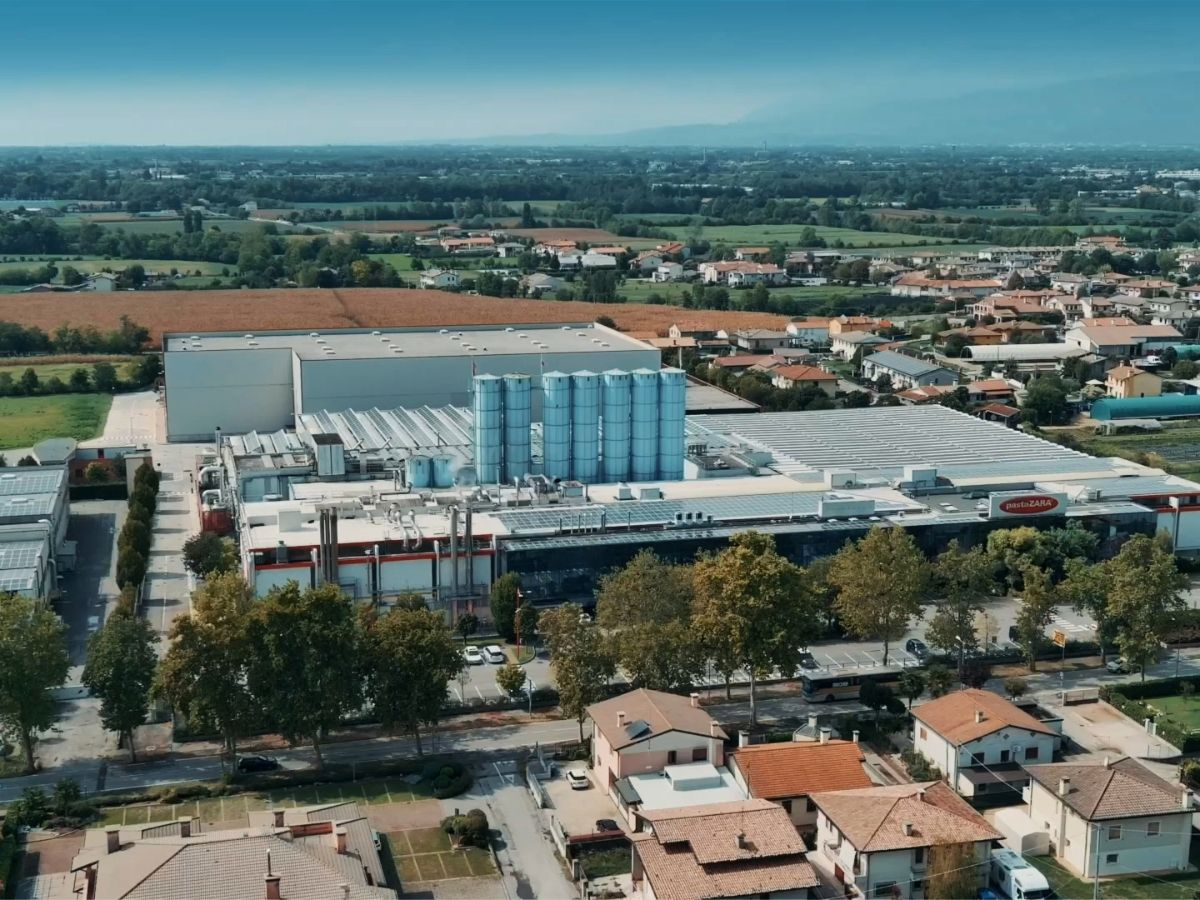
Pasta Zara has published its first Sustainability Report, a document that marks a turning point in the company’s sustainable development journey and establishes structured operational management of ESG factors.
With a production of 118.999 tonnes of pasta and a turnover of 154 million euros, the Treviso-based company confirms its role as an international player, translating its longstanding passion for pasta-making into concrete objectives for measurement and continuous improvement.
Since 1898 we have produced pasta with passion and a sense of responsibility towards consumers and the local area,” stated Furio Bragagnolo, President of Pasta Zara. “Today, we are responding to demand that rewards quality and transparency. Our commitment to economic, social and environmental sustainability can be verified in practice: our climate reporting journey and the strengthening of internal expertise confirm that every action we take is geared towards generating long-term value, fully consistently with the improvement objectives defined for our environmental performance.”
CO2 emissions and water savings
The 2025 marks Pasta Zara’s first complete inventory of greenhouse gas emissions, calculated according to the GHG Protocol and ISO certified 14064-1 for the years 2024 and 2025. Total emissions stood at 247.068 tonnes of CO2 equivalent, down by 5,1% compared with 2024, mainly thanks to the reduction in emissions associated with the purchase of goods and services.
As regards the water resource, the installation of a new industrial chiller made it possible to reduce consumption intensity by 36,8%, while the proportion of waste sent for recovery rose from83,7% to 90,6%. Confirming the strength of the environmental management system, active and ISO certified 14001 since 2003, the audits 2024-2025 found no non-conformities, and the Arpav inspection carried out in 2025 confirmed that the facility was being managed correctly.
LCA and science-based targets
Alongside the performance data already measured, Pasta Zara launched in 2025 a Life Cycle Assessment (LCA) project on the penne pasta marketed under the Pastificio Bragagnolobrand, to measure environmental impacts in an integrated manner throughout the product’s entire life cycle. The process will be updated in 2026, with the aim of obtaining the corresponding certification. At the same time, the company is considering joining the Science Based Targets initiative (SBTi) to define a decarbonisation plan with scientifically validated targets, the development of which is scheduled for the end of 2026.
Packaging and circularity
In line with the principles of the new European regulation PPWR (Packaging and Packaging Waste Regulation), Pasta Zara has launched a packaging redesign of the Grano Italiano range from Pastificio Bragagnolo, the company’s historic brand. The new paper-based solutions are designed as monomaterial packaging with a predominant material content of more than 95%, using water-based, solvent-free inks, in full compliance with the REACH Regulation.
People, expertise and certifications
The sustainability strategy is supported by a structured plan to enhance internal expertise. In collaboration with Guidehouse, the company team acquired expertise in the GHG Protocol for reporting Scope 1, 2 and 3emissions; in parallel, specific training on the new European PPWR directive and the circular economy was conducted through theCa’ Foscari University. The ESG journey is also monitored through the EcoVadis.
rating. At the heart of the company’s activities remain quality and food safety, guaranteed by a certified system that is evolving from ISO 9001 towards IFS (International Featured Standards). In 2025 the organic certifications (EC Reg. No. 848/2018 and 1165/2021), Kosher and Halal.
certifications were also renewed. “Our next steps have already been mapped out through ambitious and concrete objectives. At the same time, we will continue to evolve our ethical identity: we will work to lay the necessary foundations for adopting the UNIDROIT principles and will proceed with revising our code of ethics. We will work to ensure that every aspect of our growth, from machinery to people, is aligned with ever higher standards of responsibility,” concludes Furio Bragagnolo.
This article was translated from the original Italian version with the assistance of artificial intelligence. In case of discrepancies, please refer to the original Italian version.