

Masi Group: the 2026 harvest is markedly early and complex, but with good-quality grapes
Masi Group: the 2026 harvest is markedly early and complex, but with good-quality grapes
- Information
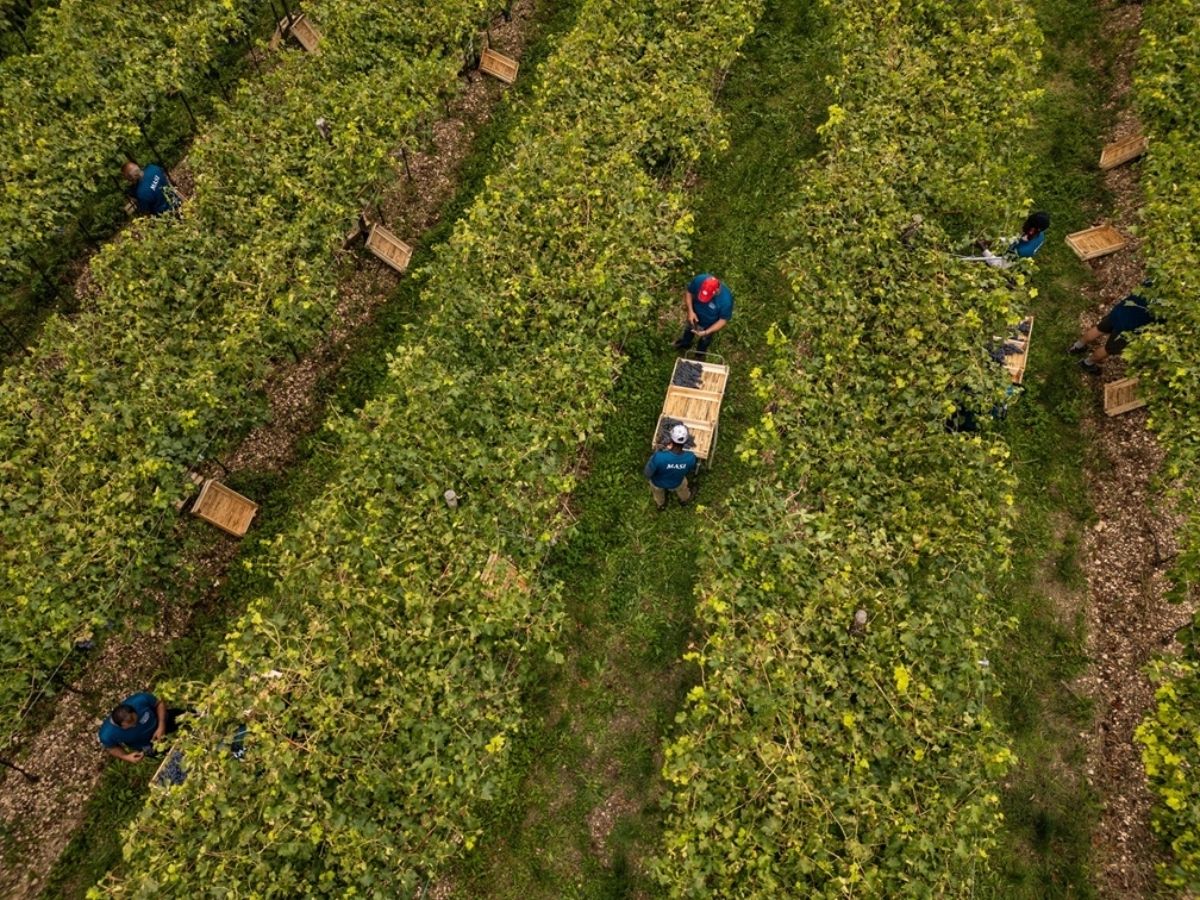
Masi Group comments on the progress of the 2026 harvest at its estates, with harvesting beginning well ahead of the usual schedule.
An early harvest
“In my experience of living alongside the Masi vineyards for several decades, spread across numerous areas of Triveneto and Italy, I have no recollection of a harvest this early: as early as the beginning of August for the early white grapes and Pinot Noir (Trentino, Conegliano Valdobbiadene, Oltrepò Pavese and Grave del Friuli), and at the beginning of September in the Verona area and in Valpolicella Classica for the selected grapes for Amarone, around two weeks earlier than the average of the last decade,” comments Sandro Boscaini, president of Masi, adding: “The world has really changed! I joined the company in the 1960s, and the winegrower friends of that time also remember how it was customary in Valpolicella to begin harvesting for drying from the feast of Our Lady of the Rosary, that is, on 7 October”.
The unfavourable climate
The growing season is distinguished by high temperatures, limited water availability and a succession of extreme weather events, which have made the vegetative cycle particularly complex and uneven across territories and vineyards. The most evident effects include the marked advance in phenological ripening, the reduction in berry weight and, in some areas, yields.
Despite the pressure exerted by heat and drought, the health of the grapes is overall very positive, with appropriate analytical parameters. We have the foundations for wines with structure and intensity, but also balance and a sense of place; the character of the vintage will nevertheless be defined at the end of the production process, also taking into account the drying phase in the case of Amarone.
"Climatic conditions and weather events require precision interventions and an in-depth knowledge of every single plot. Research and technical expertise constitute a wealth of experience that enables us to interpret the different responses of the vine and guide the work, from the vineyard to the cellar. Every harvest reminds us that it is the technician’s duty to understand the nature of the grapes available, assess choices and interventions with a view to achieving the best qualitative result", says the Masi Technical Group.
Valpolicella
Looking more closely at Valpolicella, the high-hill vineyards have shown particular resilience to heat and limited water availability, maintaining regularity and a favourable balance between technical and phenolic ripeness. The pergola veronese has confirmed its value: a broader canopy provides greater protection for the bunches and helps reduce direct exposure to solar radiation and the resulting heat stress, promoting more gradual ripening.
The production regulations
Every harvest is a moment of reflection and assessment: for the individual winegrower, for the designations and institutions and, more generally, for the Italian vineyard. The climate and the market are profoundly changing the context with which the sector is called upon to engage. The sequence of such unusual harvests highlights the need to take full account of climate change. In most production regulations, the need to position the boundaries at higher elevations, where possible, on hillside land has not been acknowledged.
Sandro Boscaini: “The production regulations almost always represent the situation of more than thirty years ago. In the current situation of significant change, two aspects must be considered. The first concerns the balance between supply and demand, which requires decisions: we are producing with a vineyard designed for a market that has now been superseded, both in terms of the quantity required and its suitability for consumer preferences, which today are directed towards lighter whites and reds. In general, I do not see any structural measures capable of responding to this. Courageous choices are needed in the face of the now excessively numerous designations. It is necessary to distinguish those that express a strong sense of place and recognised high quality from those that designate wines rarely appreciated outside their own regional sphere. The second concerns the concept of quality and, consequently, price. There are quality wines, while others additionally offer perceived quality: that renown of the designation which allows higher remuneration, but also entails rigour and discipline and appropriate market positioning”.
This article was translated from the original Italian version with the assistance of artificial intelligence. In case of discrepancies, please refer to the original Italian version.