Cavit follows the progress of the harvest 2026 balancing scientific rigour with craftsmanship
Cavit follows the progress of the harvest 2026 balancing scientific rigour with craftsmanship
- Information
Cavit announces that the harvest 2026 is in full swing, with an advance of about one week compared with the previous season, due to above-average spring temperatures.
The data collection platform
In a year in which the vine’s cycle is accelerating, the ability to read and interpret the land makes the difference: through its “distributed natural laboratory”, Cavit brings together data, agronomic expertise and knowledge of the thousands of small vineyard areas across Trentino to guide decisions in the vineyard and maximise the potential of every hectare. Making this “coordination” possible is the work of the Consortium’s team of agronomists, which since 2010 has been using Pica, the Integrated Agricultural and Viticultural Mapping Platform, to collect data and maintain a direct line with its winegrower members: here, the rigour of scientific analysis is transformed into practical agronomic guidance for those working in the vineyards, making it possible to monitor more than 6.350 hectares of vineyard, more than 60% of the vineyard area of the province of Trento.
An early season under close observation
The season 2026 opened with above-average spring temperatures: in April, in the valley-floor areas, Trentino recorded an increase of approximately 2 degrees compared with the average for the last 25 years. The milder temperatures at the end of winter and earlier budburst accelerated the vine’s cycle, confirming that harvesting is now beginning approximately one week earlier than the 2025. The health of the vegetation and bunches is excellent across all the region’s vineyard areas, with almost no pressure from fungal diseases, unlike the previous season.
The rigour of the numbers
Through Pica, Cavit’s agronomic team monitors ripening across a fixed sample of 1.000 representative vineyards, mapped continuously to compare each season with previous ones. In the two weeks before harvesting alone, this monitoring translates into more than 5.000 analyses of the grapes, an average of 5 measurements for each monitored vineyard, covering parameters such as sugars, acidity and aromatic precursors—the same factors that make it possible to set the harvest date only once optimum standards have been reached.
Climate monitoring is entrusted to a network of weather stations positioned every 70 hectares of vineyard, whose data flow feeds a direct communication system with the members: since the beginning of the year, Cavit has sent approximately 50 technical updates and more than 30.000 alert text messages to the more than 5.250 winegrowers in the supply chain, supported by the agronomists’ weekly presence in the vineyards.
Geological precision: the cases of Traminer and Pinot Noir
The strength of widespread monitoring lies in its ability to match each grape variety with its ideal soil. Thanks to the soil and climate data collected by Pica, in recent years Cavit’s agronomists have refined the positioning of new plantings: for example, Traminer Aromatico is now concentrated on glacial soils, in the altitudinal band between 350 and 550 m above sea level, where slightly higher average temperatures favour more intense and harmonious aromatic notes. In parallel, in areas with similar characteristics, growing Pinot Noir results in wines with greater character and longevity.
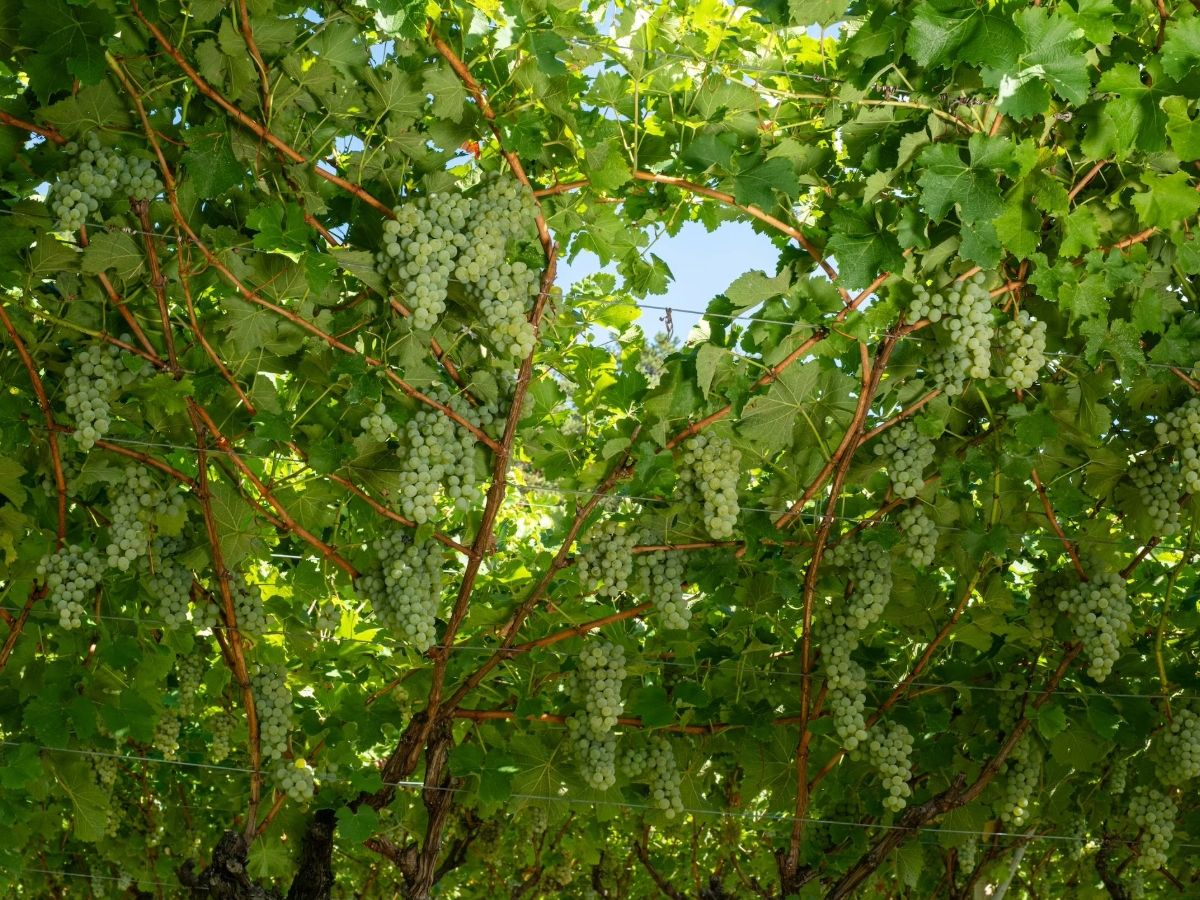
“For now, the situation in the vineyards of Trentino is very positive across all areas of the region: the health of the vegetation and bunches is excellent. The wine-growing areas characterised by deep soils of glacial origin, located in the mid-hill altitudinal band, are proving more resilient to climate change because they guarantee a greater water reserve in the soil. The Trentino pergoletta training system is also proving particularly useful because it protects the bunches from the sun during the hottest hours of the day,” explains Andrea Faustini, oenologist, coordinator and scientific director of Cavit’s agronomic team.
From vineyard to cellar
Behind Pica’s figures is a model founded on the artisanal dimension, which the agronomic team follows closely: Cavit’s more than 5.250 members cultivate on average an average of 1,2 hectares each, an area equivalent to almost two football pitches, and the harvest remains strictly manual, allowing the grapes to be selected directly in the vineyard.
It is on this basis that the winemakers’ work is built, as they are tasked with creating in the cellar the final synthesis of the different performances of the region’s small vineyard areas, while maintaining the consistent style of each label, year after year. “Knowing the potential of each individual plot in advance enables us, in the cellar, to create a wine that respects the identity of each small area and a consistent style for each label, harvest after harvest. This is where scientific rigour meets the winemaker’s craft,” concludes Andrea Faustini.
The ability to combine scientific rigour with craftsmanship, from the vineyard through to the final synthesis in the cellar, enables the Consortium to guarantee high and consistent quality across its broad range of wines and sparkling wines, making it accessible through the balance between value and price that distinguishes Cavit’s offering. This model confirms Cavit’s role as the leader of a complex, widespread system, capable of gathering thousands of signals from the land and returning them as one coherent voice, from vineyard to global market.
This article was translated from the original Italian version with the assistance of artificial intelligence. In case of discrepancies, please refer to the original Italian version.