Agrintesa: financial statements 2025-2026 approved, with a sharply rising value of production
Agrintesa: financial statements 2025-2026 approved, with a sharply rising value of production
- Information
Agrintesa announces that it has closed the 2025-2026 financial year, which ended last 30 April, with the highest result in the cooperative's history: a value of production of 445 million euros, while the consolidated value of production reached 495 million euros.
The financial statements were submitted to the members during the four separate meetings held from 19 to 23 October and approved by the General Assembly of delegates.
The result is particularly significant considering that production volumes remained below full potential and broadly in line with the previous financial year, due to the climatic anomalies that continue to affect the main production areas. The value of production was supported above all by the positive performance of the fruit-growing segment and by reasonably strong performance in the wine sector.
The contribution of the new companies
The 2025-2026 financial year also marks the full integration into Agrintesa of the cooperatives Fruit Modena Group and Ortolani Cofri, whose entry contributed to consolidating the cooperative's production and membership base. The members' register is also growing, thanks to the contribution of the organisations integrated during the last financial year and the arrival of new companies: in 2026, in a year that is bringing out more of the production potential of the membership base, Agrintesa can count on approximately 10.900 hectares devoted to fruit and vegetables and 7.400 hectares of vineyards.
The already solid capital structure is also continuing to strengthen: [[ARTW_HTMLOPEN_AAAP] net assets have risen to 159,5 million euros, while consolidated profit for the financial year stands at 2,3 million euros.
The commentary
“The most important result of these financial statements is the ability to return value to member farms in a context that continues to be complex from a production and climate perspective,” comments Aristide Castellari, president of Agrintesa. “The payments recognised to members are the result of the strong positioning of our products, thanks to the work of the commercial companies that manage to place them in the top market segment, and of the strong competitiveness that the cooperative is able to demonstrate through careful and efficient management. It is this ability to create value that we want to continue working on: the solidity we have achieved enables us to invest, innovate and make new projects and tools available to members to support them through the difficulties and transformations that agriculture is experiencing. For us, a substantial capital structure is also a lever for supporting agricultural businesses and preparing Agrintesa today for the challenges of the coming years.”
Investments
The meetings also provided an opportunity to present the progress of the investment plan 2024-2027 to the members, which provides for total investments of approximately 55 million euros.
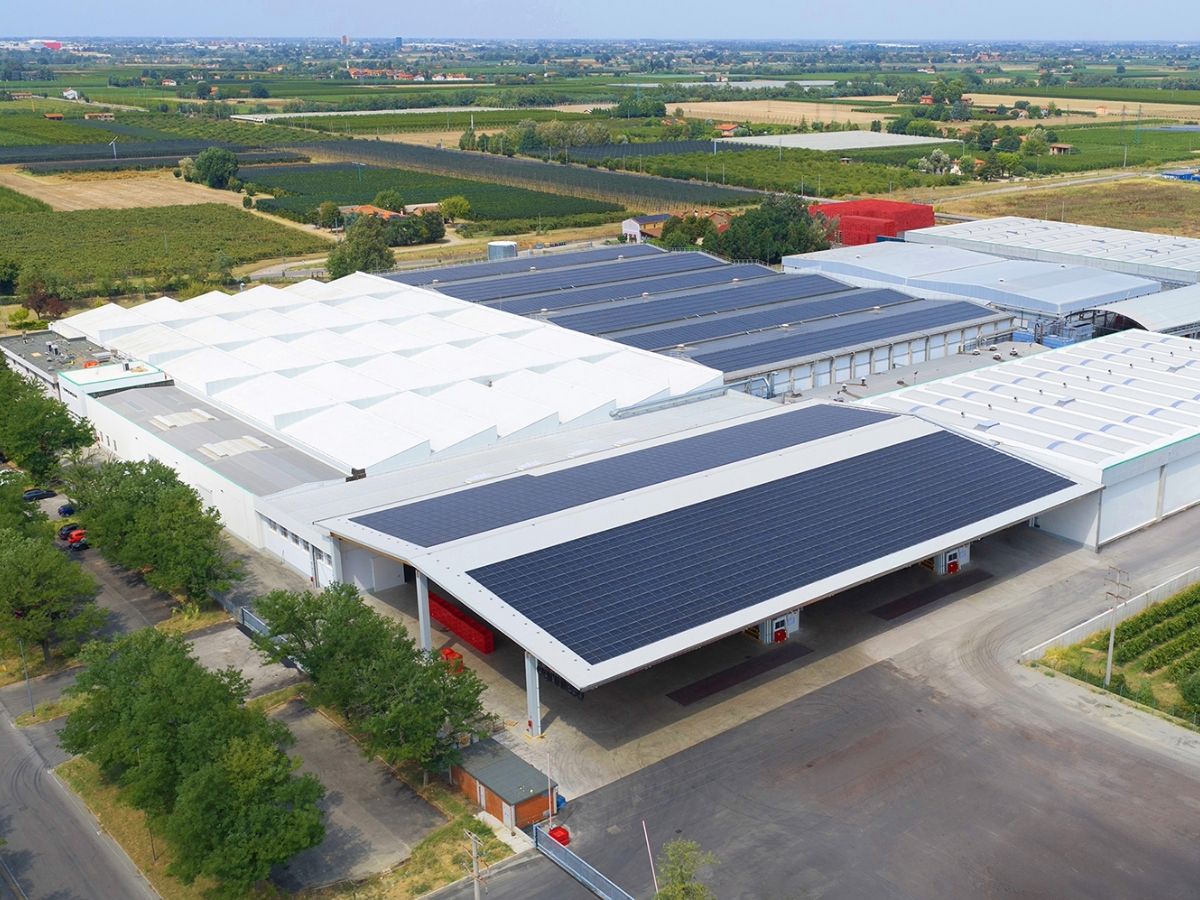
“The programme includes the expansion and refurbishment of the Castel Bolognese plant in the Ravenna area, inaugurated last September,” explains general manager Cristian Moretti “as well as investments in the digitalisation of processes and the new management system, new processing and wine-making plants, new photovoltaic systems for energy production and work on the cooperative's main headquarters. These investments benefit from the support of two Pnrr projects, two Psr projects and further financing instruments, enabling Agrintesa to accelerate a modernisation programme aimed at increasing efficiency, process quality and service capacity without affecting the level of consolidated depreciation. The plan will be completed during the current financial year and represents one of the tools through which the cooperative intends to prepare for developments in production and markets, strengthening infrastructure, technology and organisation.”
During the meetings, two new regulations supporting member farms were also approved; these are Agrintesa's own instruments that complement the Ocm. The first introduces a form of concessionary financing for members, designed to provide additional financial support to agricultural businesses investing in new plantations and frost protection.
The second instead provides for contributions towards the installation of rain covers in orchards, measures that are becoming increasingly important for protecting production and managing climate risks. Through these measures, the cooperative aims to directly support the investment capacity of member businesses, offering further tools to address climate risks and support their development
This article was translated from the original Italian version with the assistance of artificial intelligence. In case of discrepancies, please refer to the original Italian version.