The weakening euro is driving up import costs for Italian retailers
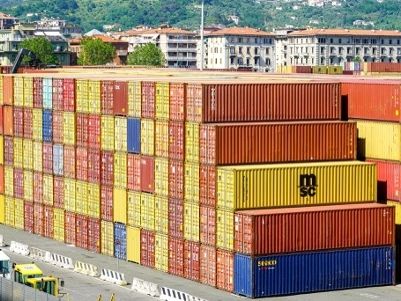
The weakening euro is driving up import costs for Italian retailers
- Information
The euro's fall towards 1,11 dollars is increasing the cost of stock and energy invoiced in dollars for Italian retailers, making the exchange rate a crucial purchasing issue.
For Italian retailers, autumn is the time when the margins for the following year are quietly decided. Spring and summer collections are confirmed with Asian suppliers, while distribution centres are already stocked with goods for Black Week. This year, both purchasing cycles are taking place against a backdrop of significant euro weakness.
At the end of October, the euro hit its lowest level against the dollar since May 2025. Since then, the exchange rate of 1,11 dollars has seen only a slight recovery. French public finances and rising energy prices have exerted further pressure. Nor did the European Central Bank's decision to raise the deposit rate in September and leave it unchanged in October help. Retailers who sell in euros and pay in dollars are concerned about their purchasing costs.
How a weaker euro affects import costs
The dollar is the currency of choice for most foreign suppliers. According to Eurostat data on invoicing currencies, in 2024 the US dollar accounted for around 51% of extra-EU goods imports, compared with around 40% for the euro. Oil is traded predominantly in dollars, and most purchasing contracts with Asian manufacturers are also denominated in this currency.
Italy is more affected than neighbouring countries. Istat data show that in 2025 43,4% of the value of Italian imports came from non-EU countries, a higher share than in France or Germany. Energy is another pressure point. In its September 2026 release on extra-EU trade, Istat estimated Italy's energy deficit with non-EU countries at 5,7 billion euros, up from 3,4 billion euros the previous year. Rising energy costs also affect retailers through shops' electricity bills, refrigeration and transport.
The impact of the exchange rate is easy to understand. The euro opened 2026 at around 1,17 dollars. At 1,11 dollars, the same dollar invoice costs more than 5% more in euro terms, even before any transport costs or customs duties are added. However, the greater risk is often the extent of fluctuations between the day an order is priced and the day it is paid for.
The gap between ordering and payment
Collection prices are usually set months before suppliers are paid, leaving retailers' euro costs uncertain. Large groups have treasury departments dedicated to this, but in many mid-sized chains the task falls to the finance manager or purchasing manager, who needs a clear view of where the exchange rate stands relative to budget assumptions. Charting platforms such as TradingView make it easier for teams to track the EUR/USD exchange rate, alongside supplier quotes and purchasing budgets. Alerts can also be set for when the exchange rate reaches a level that could affect planned costs. This helps finance managers prepare appropriately for upcoming payments.

However, monitoring the exchange rate is not the same as predicting its direction. In October, Roberto Mialich, UniCredit's currency strategist, warned that the EUR/USD exchange rate could fall to 1,10 dollars, citing political tensions in France and Spain. By contrast, most economists surveyed expect the ECB to raise interest rates again in December. This move could support the euro. Retailers need a robust system that can adapt to currency volatility. One of Italy's best-known fashion chains has been using this kind of process for years.
OVS manages currency risk in its purchasing plan
OVS is one of Italy's largest clothing retailers and knows from experience that currency exposure must be managed as part of merchandise planning. Annual accounts show that the group buys most of the products it sells from foreign suppliers whose reference currency is the US dollar. To stabilise potential costs, the company regularly enters into forward contracts to buy dollars at agreed exchange rates, then adjusts the amount of currency hedging to match the expected purchases for each collection.
OVS's annual report 2022 records 35,5 million euros of positive net exchange differences on forward contracts hedging merchandise purchases, during a period when the euro fell below parity. This shows how hedging can help protect the purchasing budget when exchange rates move unfavourably. It does not eliminate the effects of a weaker euro, but it can give retailers peace of mind about the cost of future payments.
Few mid-sized retailers have a treasury function on this scale. Many, however, already use the systems needed to apply the same principles.
Integrating the exchange rate into retail systems
A starting point for businesses could be to examine the exchange rate used in ERP systems and import cost calculations. If the budget still uses an exchange rate that applied at the start of the year, reported profit margins could appear stronger than they really are. Setting it conservatively, below the current market level, and updating it monthly gives buyers and category managers figures that match the invoices they will actually have to pay.
The next step concerns supplier terms. Some Asian manufacturers quote in euros, usually incorporating their own currency risk, and comparing quotes denominated in euros and dollars helps purchasing teams understand the difference. For orders already confirmed in dollars, a forward contract arranged with a bank fixes the rate for the payment date. Retailers that also sell in dollars through international marketplaces can additionally offset some of their dollar expenses.

The final step is to link updated purchasing costs to pricing decisions. Some categories can absorb a modest cost increase, while price-sensitive lines such as electronics and everyday essentials usually cannot. Entering updated costs into pricing software enables teams to assess where price adjustments may be needed before a new collection reaches stores.
Peak season leaves less room for error
Currency fluctuations are particularly important during peak purchasing periods. Netcomm expects Italians to spend 4,3 billion euros online during Black Week this year, a period when discounts are already reducing margins. A currency that adds several points to the cost of goods leaves little room for error, and even less for the spring collections being ordered now.
Retailers do not need to predict the future direction of the euro. They need the exchange rate to be treated as real-time data in purchasing and pricing systems, reviewed with the same attention given to transport costs or rent.
This article is for informational purposes only and does not constitute financial or investment advice. CFDs are complex instruments and carry a high risk of losing money rapidly due to leverage.
Sources:
- Bloomberg – Euro hits a 17-month low
- UPI – Euro falls to its lowest level since May 2025
- Trading Economics – Euro falls to its 2025 low after ECB holds rates steady
- Euronews via Yahoo – Euro slides towards new lows
- XTB – ECB holds rates steady
- Macrotrends – Historical performance of the EUR/USD pair
- Eurostat – Extra-EU trade by invoicing currency 2024
- Istat – Extra-EU foreign trade, September 2026
- MF Newswires – Istat on Italy's extra-EU exposure
- OVS – Annual financial report 2022
- Affaritaliani – Netcomm Black Friday 2026
- it – Netcomm Black Week 2026
This article was translated from the original version in Italian with the assistance of artificial intelligence. In case of discrepancies, please refer to the original version in Italian.