The evolution of GDO: how agentic AI is transforming the supply chain and retail sales
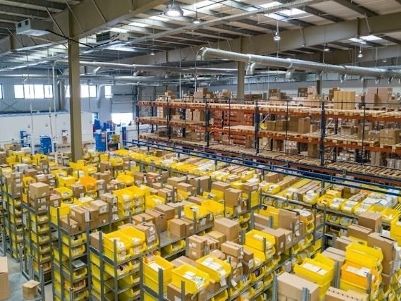
The evolution of GDO: how agentic AI is transforming the supply chain and retail sales
- Information
In large-scale retail, incorrect information about stock can cause problems from the warehouse right through to the shelf.
Agentic artificial intelligence is also being evaluated to coordinate activities and data across these stages. From stock management to assistance in shops, the role of agentic AI in modern distribution is particularly evident in its ability to coordinate information and activities that currently require manual steps. The difference compared with traditional automation lies in how agents interpret requests, use the available tools and propose actions within defined limits.
From demand forecasting to stock management: new paradigms in the supply chain
In GDO, the ability to forecast demand and manage stock dynamically represents a crucial competitive advantage. When connected to reliable information sources and authorised to perform defined tasks, intelligent agents can analyse sales, promotion and seasonality data to support planning. Unlike a flow based solely on predefined rules, an agent can combine multiple steps to achieve an objective. This does not mean, however, that it learns automatically from every interaction or that its recommendations are always correct. Nevertheless, the quality of forecasts depends closely on the accuracy and completeness of the data collected, as well as on effective integration with the legacy systems present in warehouses and retail outlets. The objective is not predictive perfection, but greater responsiveness and flexibility in the face of market fluctuations.
Logistics coordination and the flow of information between warehouses and retail outlets
Logistics in GDO is characterised by a complex network of warehouses, distribution centres and shops, each with different requirements and timelines. When connected to authorised systems, agents can help flag delays, compare availability and propose interventions in logistics flows. The reduction of stockouts must be verified against operational data, not taken for granted. Their added value lies in their ability to interact with multiple information systems, aggregating heterogeneous data and suggesting corrective actions in real time. This approach differs from simple automation, which is limited to carrying out repetitive tasks without adapting to changes in context. Collaboration between software agents and human operators remains central: strategic decisions are suggested by the systems, but supervision and final validation always rest with experienced staff.
Advanced assistance for staff and consumers in retail outlets
In retail outlets, the presence of intelligent agents translates into advanced support tools for both staff and customers. These systems can provide personalised suggestions for product placement, flag shelf replenishment requirements in real time and assist in handling customer requests. For consumers, the technology takes the form of virtual assistance services, purchasing advice and detailed product information, accessible via digital kiosks or mobile applications. Compared with a chatbot that only provides answers, a suitably configured agent can consult multiple sources and perform permitted operations; data and authorisation checks are nevertheless required. Here too, the quality of the experience depends on effective integration with existing information systems and on the availability of up-to-date, reliable data.
Differences between intelligent agents and traditional automation
One of the most innovative aspects of the agentic approach lies in its substantial difference from conventional automation solutions. While traditional automation is based on rigid scripts and predefined processes, intelligent agents are designed to pursue specific objectives, adapting to changes in circumstances and interacting autonomously with their surroundings. This paradigm enables greater flexibility and responsiveness to unforeseen events, increasingly decisive factors in a retail market subject to rapid change. However, adopting these systems requires careful assessment of the quality of input data, a robust integration infrastructure for existing platforms and an adequate level of human supervision to ensure transparency and control over automated decisions.
Integration, data quality and human supervision: the challenges of the new intelligence in GDO
The spread of intelligent agents in GDO is not without obstacles. Data quality and consistency represent one of the main challenges: incomplete or outdated data can undermine the effectiveness of the decisions suggested by intelligent systems. Integration with management systems already in use requires technological investment and a review of operational processes, to prevent the creation of information silos and ensure a unified view of the entire distribution chain. For more sensitive interventions, authorisation, operation logs and procedures are needed to allow staff to intervene if the system proposes inappropriate actions. Agents can suggest interventions, but staff remain responsible for decisions and operational checks.
Prospects for GDO: towards human-machine collaboration
The evolution of organised distribution involves growing collaboration between intelligent systems and human operators. Artificial intelligence agents do not eliminate the need for human control, but they can help make the management of specific activities in the supply chain and retail outlets more timely. Their adoption requires a gradual approach, attentive to the specific characteristics of each business and to staff training needs. Evaluating these tools requires testing them on real processes: the quality of recommendations, errors, intervention times and the ability to reconstruct decisions.
This article was translated from the original Italian version with the assistance of artificial intelligence. In case of discrepancies, please refer to the original Italian version.