The Italian Cacciatore Consortium celebrates 25 of the PDO
The Italian Cacciatore Consortium celebrates 25 of the PDO
- Information
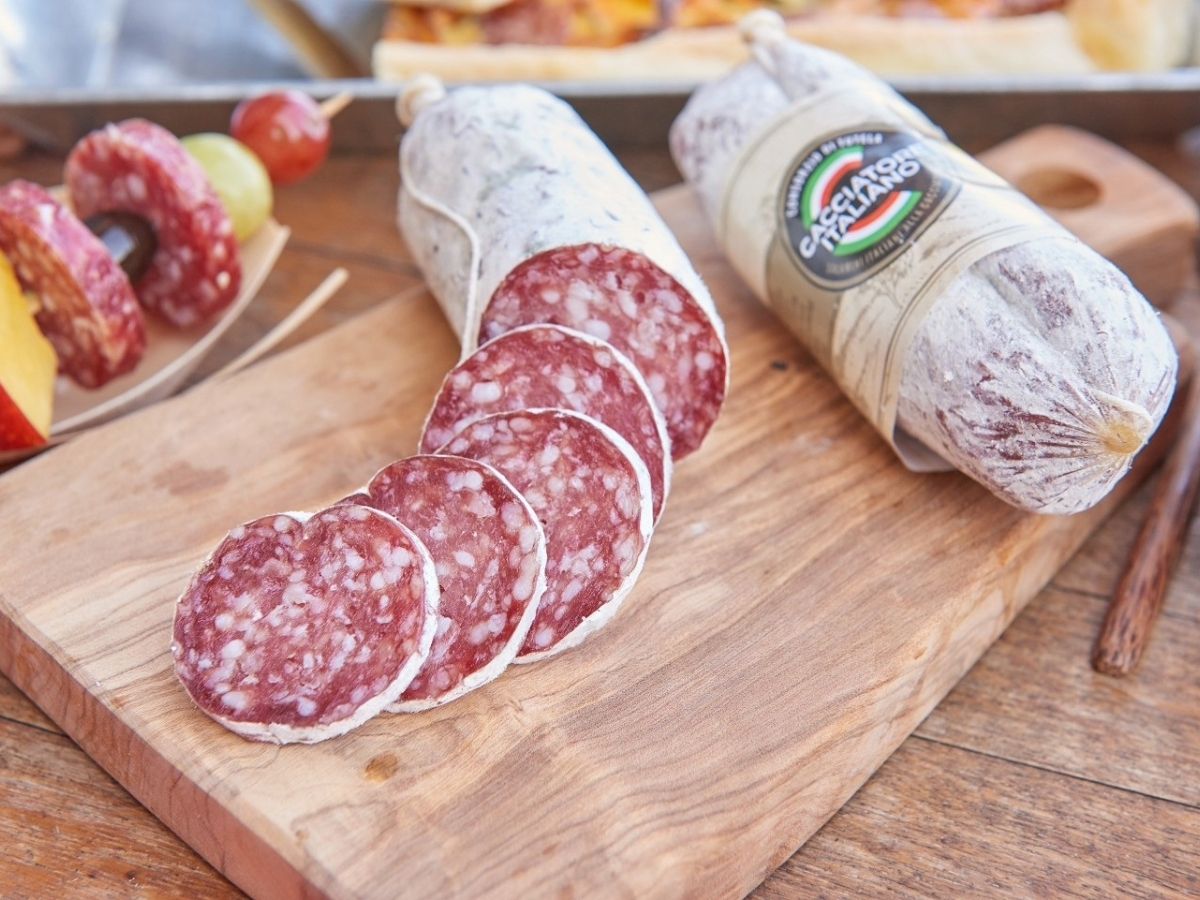
The Italian Cacciatore Consortium celebrates 25 years of the PDO: in 2001, the Salamini Italiani alla Cacciatora, after 5 years of negotiations with the EU, obtained the prestigious recognition, an important milestone that also represented a first in the European cured-meat sector.
The term
To understand the importance of this recognition, it is worth remembering that the term “Cacciatore”, when applied to the category of salami, has always been synonymous with a small-sized salami commonly known as “Cacciatorino” or “Salamino”, thereby identifying the commercial identity of a salami used by hunters during their hunting trips. Until 2001, therefore, the name “Cacciatore” was used only in Italy; no one used this term in Europe. When it was registered, with the term “Italiano” included in the PDO, it also achieved a first. In practice, it is the only European designation that refers to the name of the country rather than to a city or region.
The Consortium
In 2003, the protection consortium was then established and began its activities by drawing up the control plan, bringing together the leading producers, which at the time numbered 40 companies.
Subsequently, marketing activity targeting the trade was set up to inform them about the added value of the PDO compared with the generic product. To provide better support for this activity, the Consortium also began organising advertising campaigns in the press, as well as radio/TV PR activities aimed at consumers. In addition, thanks to the public ministerial, regional and European funding won by the Consortium, promotional activities have intensified to include social media management, television and radio campaigns, and activities abroad.
The figures
Today, Cacciatore Italiano is the European cured meat product protected by a PDO with the highest volumes, amounting to more than 4 million kg produced. This means that, given that the average size is 200 g, approximately 20 million Cacciatori are placed on the market every year.
Its small size and short maturation period, which characterises it (approximately 2-3 weeks), make it a salami with a soft texture and a sweet, delicate flavour, ideal for many consumption occasions: from an afternoon snack to a snack, from a starter to an aperitif, inevitably triggering the phenomenon of “one slice leads to another”. Market data also confirms the continued appreciation and growth of Salame Cacciatore Italiano both in Italy and abroad. In 2025, there was, in fact, a marked increase in sales (+5%), exports (+19%) and sliced product (+47%).
It should be emphasised that exports are chiefly driving this growth, to the extent that today the share of sales abroad accounts for approximately 40% of the certified total, compared with 34% of the share recorded in 2024.
On the export front, the outstanding performance in Germany (+39%) is also worth noting; it remains the leading target market, increasing from 47% to 52% of total exports. In other words, more than half of exports go to Germany. Switzerland, the Netherlands, Belgium, Uk and Austria follow.
Particularly outstanding is the performance in Uk (+74%), attributable to the promotion programme The Eu Fab 6 Savour the Pdo and Pgi Wines and Deli Meats from Europe, funded by the EU and well structured around a series of activities, including the opportunity to taste the product in English supermarkets with the option of purchasing it directly in-store, which is evidently producing results.
The comment
“25 years of the PDO for the Salamini Italiani alla Cacciatora, which are celebrating new records and seeing the Consortium increasingly committed to protecting, promoting and enhancing the product both on the domestic market and abroad, with the aim of expanding the growth area by involving new and interesting target markets,” declares Paolo Beretta, president of the Italian Cacciatore Consortium.
This article was translated from the original Italian version with the assistance of artificial intelligence. In case of discrepancies, please refer to the original Italian version.