World Cotton Day: Fairtrade draws attention to supply chain traceability
World Cotton Day: Fairtrade draws attention to supply chain traceability
- Information
On the occasion of World Cotton Day, celebrated today, Fairtrade Italia draws attention to a supply chain that currently involves 100 million rural families in 65 countries and invites Italian textile companies to consider certified traceability a competitive advantage, also in light of the new European regulatory framework.
The hidden costs of cotton
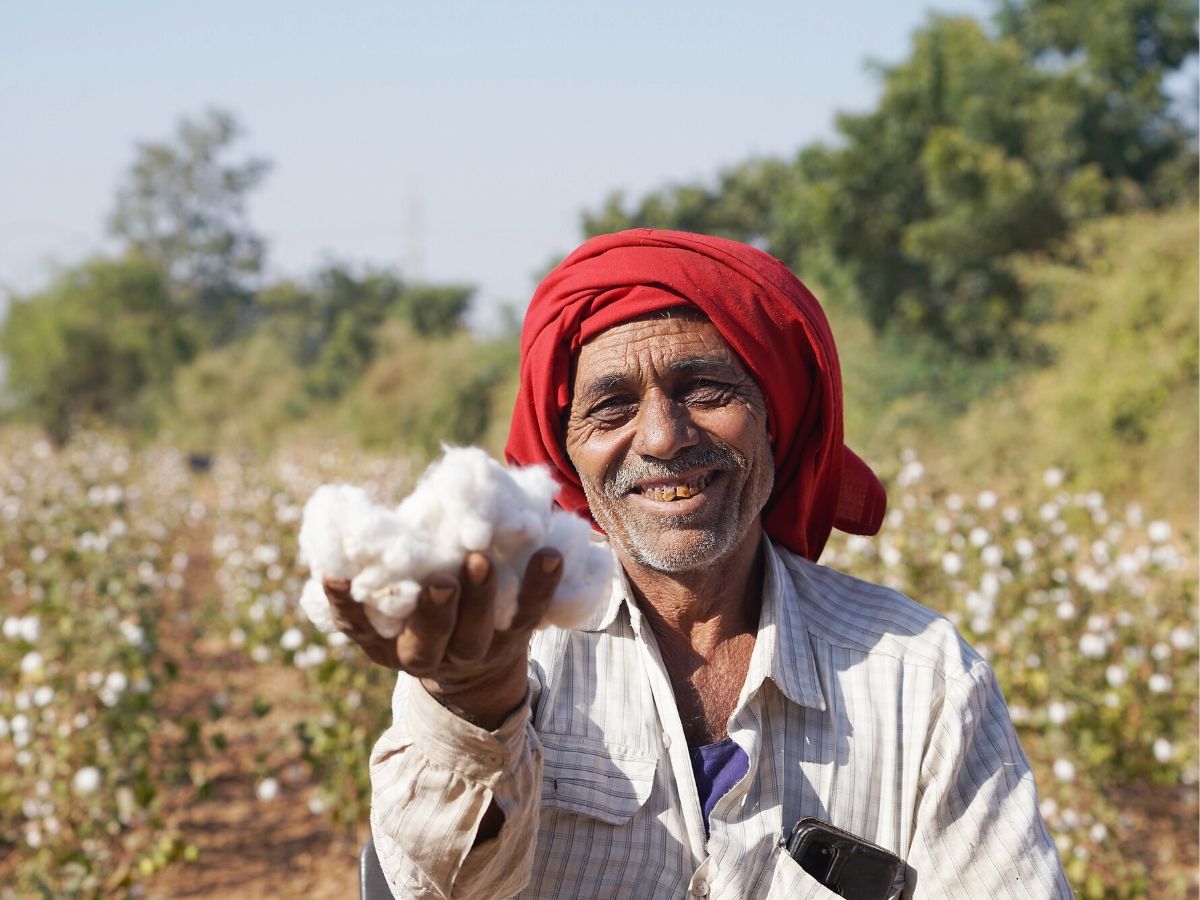
Global cotton production stands at approximately 25 million tonnes per year and covers almost 30 million hectares of agricultural land. Although 60% of the world's fibre is grown by smallholder farmers in developing countries, the market is strongly influenced by government subsidies and large-scale industrial volumes from countries such as the United States and China. This situation generates high price volatility and keeps smallholder farmers in a state of poverty and indebtedness.
Added to this imbalance are significant ecological impacts: conventional cultivation accounts for 6% of the world's pesticides and 16% of its insecticides, requires up to 3.644 cubic metres of water per tonne and uses 75% genetically modified seeds, with high purchase costs that deplete soil biodiversity. Along the manufacturing stages of ginning, spinning and packaging, the cost and time pressures of fast fashion ultimately expose workers to demanding shifts, inadequate wages and the risk of child labour during harvesting.
The Fairtrade model for the supply chain
This is where Fairtrade Italia's role comes in. In Italy, since 1994, it has promoted the Fairtrade international certification system for transparent and responsible supply chains, operating as an infrastructure for shared governance. Through the Fairtrade Cotton and Textile Standards, the system rebalances relations between producers and the market across the entire supply chain, from field to finished garment.
Two key instruments are involved: the Fairtrade Minimum Price, which acts as a safety net against price collapses, and the Fairtrade Premium, the additional sum that cooperatives manage independently to fund schools, clinics and infrastructure, guaranteeing stability where the conventional market creates uncertainty. Suffice it to consider that in 2025, purchases of certified cotton in Italy generated 134.273 euros in Premium for the farming communities of origin.
Alongside the economic guarantees are rigorous environmental and social criteria: the standards established by the organisation prohibit genetically modified seeds and harmful chemicals, enabling approximately 60% of Fairtrade-certified cotton to also obtain organic certification.
In the subsequent manufacturing stages, the supply chain is verified by the independent body Flocert to guarantee lawful employment contracts and safety in factories. This model therefore focuses both on the provenance and quality of the raw material and on the people and communities involved in its production.
Traceability and new European rules
Certified traceability is also becoming increasingly important in light of the European regulatory framework. The Directive (EU) 2024/825 on empowering consumers, applicable from 27 September 2026, prohibits generic environmental claims lacking evidence and allows sustainability labels only when they are based on independent certification systems. The Espr Regulation will also introduce the digital passport for textile products, with verifiable information on the origin of raw materials. For fashion and sports companies, a certified supply chain thus becomes the basis for communicating credibly and compliantly.
A specific example
Among the most recent collaborations, the one between Fairtrade and Simond, the historic mountaineering and climbing brand of Decathlon Group since 2008, shows how these principles can be translated into products, including technical clothing.
The brand has in fact developed a new clothing collection (T-shirt, hoodie and cap) made from Fairtrade-certified cotton, with the aim of combining the technical characteristics and comfort of the garments with specific attention to the origin of the raw material and the conditions of the farming communities involved in its production.
A project documented in the film "Every Move Counts", through the eyes of mountaineer Jean Rouaux. During a journey in India, the athlete retraces the entire cotton supply chain, placing people's stories at the centre to demonstrate how every conscious purchasing choice can have a real impact on local producers.
The comment
“The textile supply chain is among the most complex and fragmented in the world, with social and environmental costs that often remain invisible to consumers,” says Paolo Pastore, General Manager of Fairtrade Italia. “The new European rules require companies to provide verifiable evidence to support what they communicate. Independent certification of the supply chain, from field to finished garment, provides this guarantee and protects the dignity of the farmers of origin. We invite Italian fashion and sports brands to make transparency a competitive advantage: the collaboration with Simond demonstrates that ethics and high technical performance can coexist in the same garment.”
This article was translated from the original Italian version with the assistance of artificial intelligence. In case of discrepancies, please refer to the original Italian version.