The strategic threshold: how to combine visual merchandising and safety in retail outlets
The strategic threshold: how to combine visual merchandising and safety in retail outlets
- Information
The entrance to a retail outlet or commercial space concentrates the promise of the shopping experience within just a few square metres. At the exact moment a potential buyer passes through the access gates, their gaze processes environmental stimuli that determine the appeal of the display and trust in the brand.
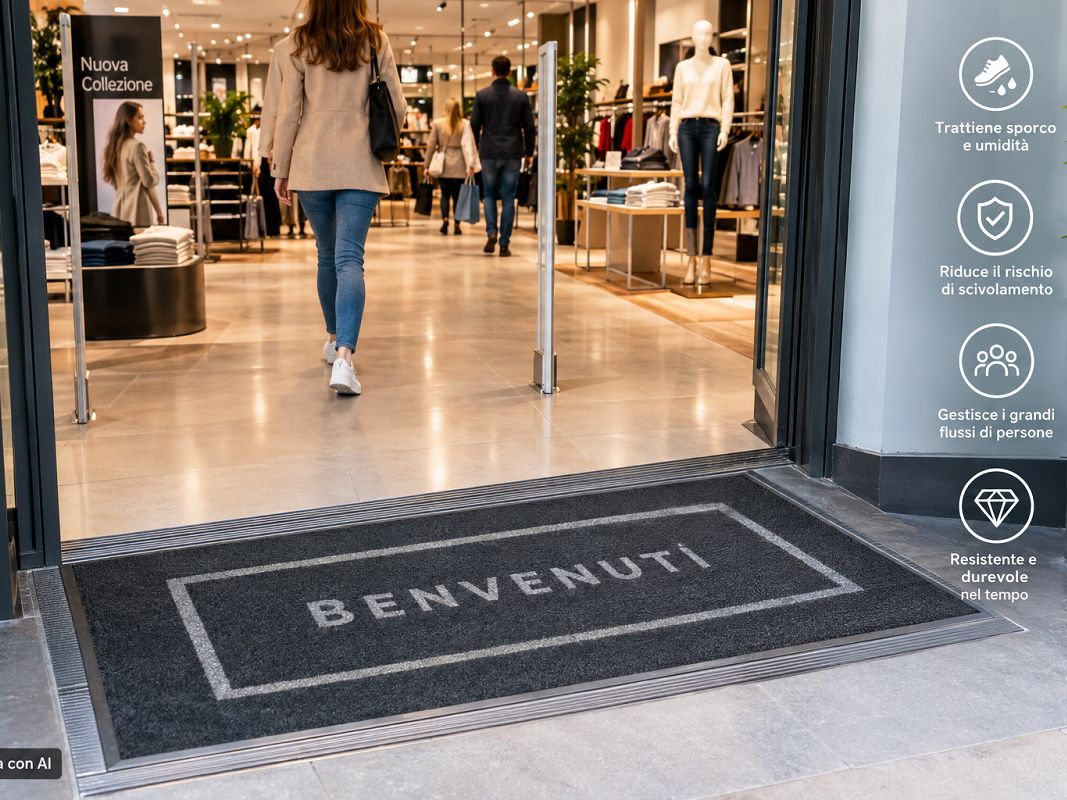
Adopting a personalised doormat does not merely meet the need to retain debris and mud brought in from outside, but constitutes a precise visual communication tool on the floor. This support acts as a link between the street and the interior layout, directing the flow of people and ensuring fully accessible conditions even on days characterised by a heavy influx of visitors.
The floor as an active visual merchandising tool
In modern retail, every visible centimetre contributes to the construction of the commercial narrative, guiding the customer through clearly defined perceptual hierarchies.
Horizontal signage positioned on the walking surface captures attention, offering an immediate opportunity to reinforce the brand positioning or highlight targeted welcome messages. The use of high-definition colour contrasts and carefully designed geometries makes it possible to define strategic stopping areas close to promotional shop windows, slowing the hurried pace of shoppers and encouraging them to view the featured products.
A doormat with a carefully considered graphic design provides continuity along the display route, enhancing the perception of the commercial offering from the very first contact and preparing visitors for a relaxed exploration of the shelves.
Managing large flows and preventing slip hazards
During seasonal peak periods, such as sales or holidays, the intensity of pedestrian traffic multiplies the critical factors affecting the performance of interior surfaces.
The continuous influx of wet footwear during periods of inclement weather quickly turns polished ceramic or marble floors into areas with a high risk of accidental falls. A system of high-absorption technical barriers retains rainwater at the source, drying soles before moisture spreads along the sales aisles.
The integration of high-grip nitrile rubber backing and bevelled perimeter edges prevents trips, dangerous ripples and the mat sliding on the underlying floor, ensuring the complete stability of the flooring even under the frequent passage of shopping trolleys or pushchairs.
Aesthetic continuity and resistance to mechanical abrasion
The ability to maintain a neat appearance throughout the trading day directly affects the reputation of the retail outlet.
Structures made with synthetic fibres and tightly twisted yarns withstand thousands of daily passes without fraying or becoming permanently flattened, preserving the sharpness of the corporate design over time. This structural resilience reduces the visible accumulation of dust on the surface, directing dirt towards the bottom of the fabric and preventing footprints from being transferred indoors.
Combining the solidity of the construction components with a rigorous graphic design transforms the threshold into a discreet protective shield, capable of protecting the integrity of commercial spaces and strengthening public safety without disrupting the harmony of the furnishings, while also reducing possible maintenance work during opening hours.
This article was translated from the original Italian version with the assistance of artificial intelligence. In case of discrepancies, please refer to the original Italian version.