Lucart invests in its plant in France to increase production capacity
Lucart invests in its plant in France to increase production capacity
- Information
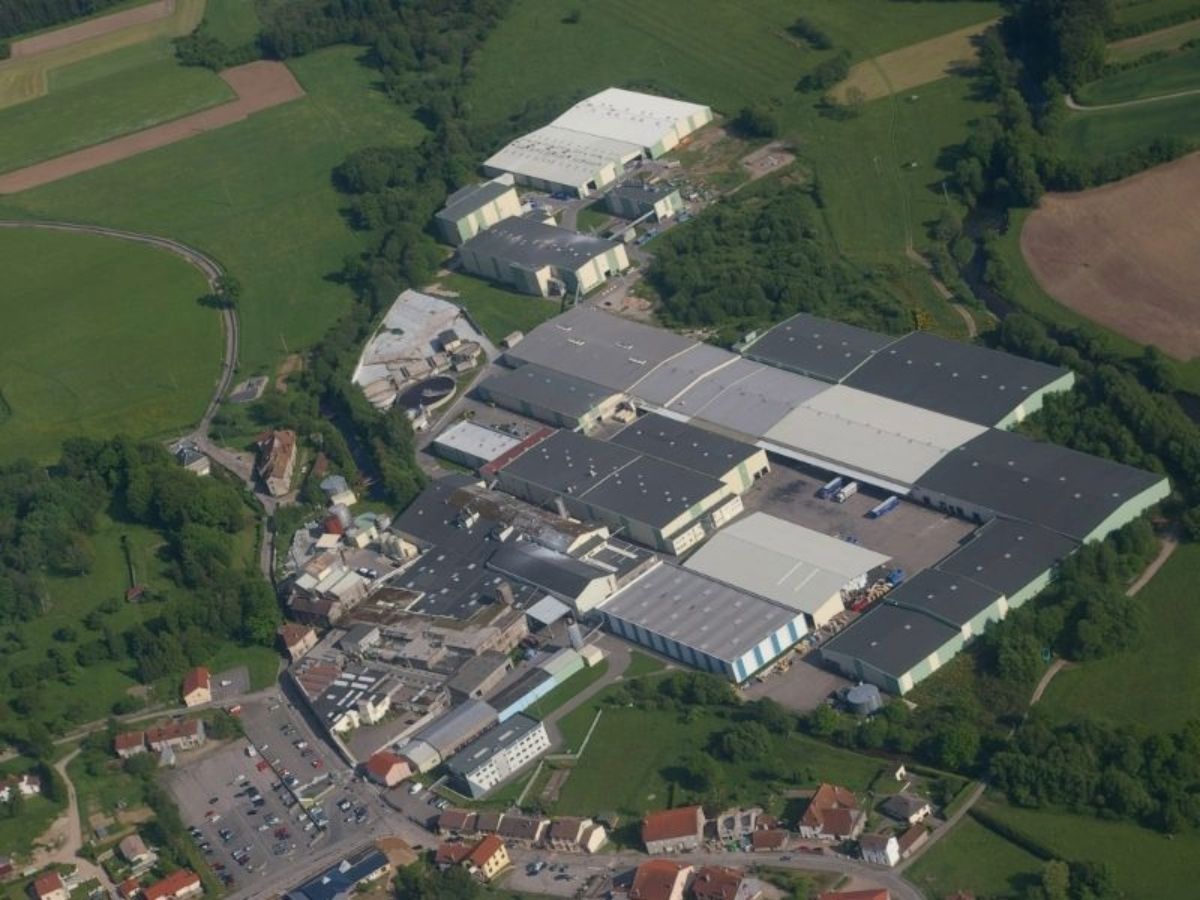
Lucart further strengthens its presence in France with a new major investment at the plant in Laval-sur-Vologne: the new PM15, paper machine supplied by Toscotec.
The investment represents a new stage in the path of industrial growth and decarbonisation, and is part of the Group’s strategy to increase its tissue paper production capacity to reach 400.000 tonnes per year by the end of 2027.
The French plant
The installation of the new machine comes at the end of a process that has transformed the French plant into one of Lucart’s main production hubs in Europe. Acquired in 2008, the Laval-sur-Vologne site has progressively expanded its role within the Group, going on to triple the turnover of the French subsidiary over fifteen years and creating more than 100 new jobs. Today, approximately 350 people work at the site.
Industrial growth has been accompanied by a gradual strengthening of the offering and infrastructure. In 2011, Laval became one of the first plants in Europe to integrate the production of tissue paper obtained from the recycling of beverage cartons, contributing to the development of the Fiberpack technology. The development of the French hub also involved logistics. In 2023, Lucart announced the acquisition of a new logistics centre in Saint-Dié-des-Vosges, operational from 2024. With a surface area of 22.000 sq m and a storage capacity of approximately 20.000 pallets, the centre was designed to consolidate finished products and manage shipments to France, Germany, Benelux and Northern European markets, working in synergy with the Laval-sur-Vologne plant.
Comments
“France has represented a fundamental component of Lucart’s international growth for twenty years. The project that began in 2008 with the acquisition of a plant has, over time, become a fully-fledged industrial and logistics hub, capable of serving strategic markets for the Group,” comments Francesco Pasquini, CEO of Lucart. “The installation of the new PM15 marks a further step forward today: we are investing simultaneously in production capacity, technology and energy efficiency, with the aim of making our development increasingly consistent with the decarbonisation path we have undertaken.”
“We are proud to support Lucart’s decarbonisation objectives by providing an advanced solution designed to optimise performance while establishing new benchmarks for energy efficiency,” says Alessandro Mennucci, CEO of Toscotec.
The new machine
The new Toscotec paper machine, designated PM15, will replace technology currently present at the Laval-sur-Vologne plant and, once operational, will increase the site’s production capacity, bringing its total tissue paper capacity to 75.000 tonnes.
The new line is equipped with a shoe press, a technological solution designed to maximise energy efficiency and the quality of the paper produced. However, the main distinctive feature concerns the process of generating and using heat, which represents the most energy-intensive phase in tissue paper production.
The machine is designed to enable the gradual transition to low-carbon energy sources. The hoods will be equipped with electric batteries and gas burners, making it possible for them to operate with up to 100% electricity. The high-efficiency Yankee cylinder will also be supplied with steam generated by a new electric boiler.
The electrification of the thermal process will therefore enable Lucart to significantly reduce the direct emissions associated with the operation of the new line, making a concrete contribution to the plant’s decarbonisation path.
The investment in PM15 is thus part of a long-term strategy focused on industrial growth and reducing the environmental impacts of production through measures targeting energy efficiency, resource use and emissions.
This article was translated from the original Italian version with the assistance of artificial intelligence. In case of discrepancies, please refer to the original Italian version.