Consorzio Doc Delle Venezie: the challenge of developing Italian wine tourism is to work together
Consorzio Doc Delle Venezie: the challenge of developing Italian wine tourism is to work together
- Information
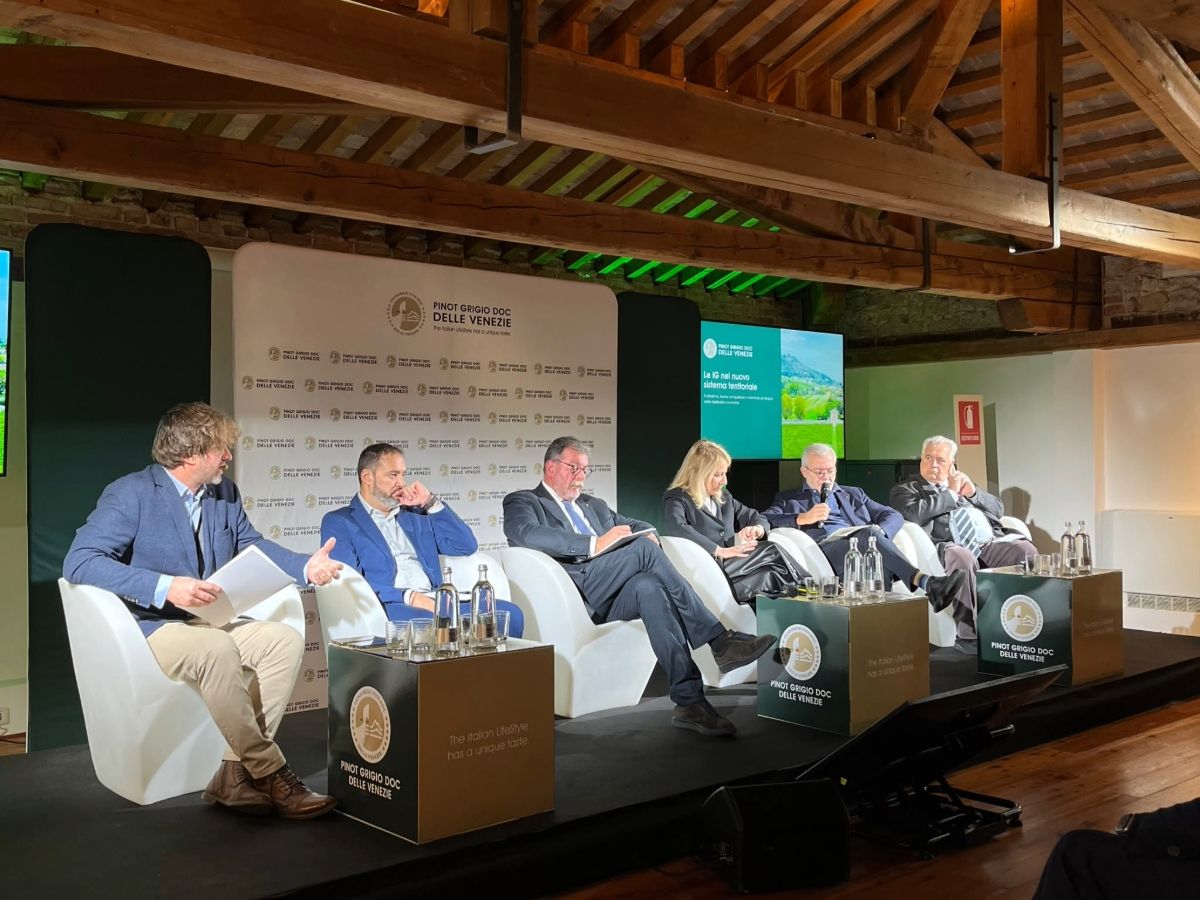
At its annual congress, held at Villa dei Vescovi in Luvigliano di Torreglia (Padua), the Consorzio Doc Delle Venezie reflected on the still untapped potential of Italian wine tourism and on the conditions needed to turn wine-growing heritage into a driver of tourism and local development.
Attended by institutional representatives, experts and industry professionals, the event, entitled “GIs in a new territorial ecosystem: wine tourism, new skills and development pathways for the destination economy”, highlighted the need to strengthen coordination between the wine industry, institutions and tourism operators, clarifying roles, skills and responsibilities in a regulatory and market context undergoing profound change.
Making the debate particularly timely is Regulation (EU) 2024/1143, which broadens the prospects for enhancing geographical indications, also providing for the development of tourism services in production areas. This development is accompanied by the ColtivaItalia bill, which has recently completed its passage through Parliament, with the aim of supporting the expansion of the responsibilities of protection consortia, including through financial and operational tools.
Opening the proceedings
The proceedings opened with institutional greetings from Luca Rigotti, president of Consorzio Doc Delle Venezie, and Dario Bond, Veneto Region Councillor for Agriculture, Forests, Mountains, Hunting Policies and Fisheries, who highlighted how, at a challenging time for the wine industry, wine tourism can offer a tangible development opportunity, provided that shared rules are established and visitor reception is better organised.
Gregorio Rigotti, representing the Autonomous Province of Trento, emphasised the value of networking and local collaboration, endorsing the Consorzio’s approach of viewing wine not merely as a product, but as a means of bringing people together, fostering dialogue and promoting growth, capable of attracting markets to the areas where it originates. Davide Usai, Director General of Fai, also recalled that landscape protection includes agricultural heritage, and expressed his pleasure at hosting the conference at one of the Foundation’s properties.
This was followed by a video message from Tourism Minister Gianmarco Mazzi, who highlighted the value of wine as a millennia-old expression of Italian history, ingenuity and identity, identifying wine tourism as one of the main ways to share this heritage. The potential is confirmed by figures showing growth in stays by foreign tourists visiting Italy for wine tourism, up by 176% in less than ten years, reaching 2,4 overnight stays and generating economic value of 396 million euros. The minister also recognised the Doc Delle Venezie supply chain as a collective heritage, highlighting the Consorzio’s role in protecting and enhancing it.
The first panel discussion
The discussion, divided into two panel sessions chaired by journalist Giambattista Marchetto, began by examining the new role of Geographical Indications and consortia in local development. The first session, “Geographical indications, consortia and territorial governance”, explored the opportunities introduced by the European regulatory framework and the need to support them with knowledge, resources and more effective coordination between public and private organisations.
This topic is linked to the ability of designations to generate value beyond the production chain. As Roberta Garibaldi of the University of Bergamo pointed out, wine tourism is now one of the most promising opportunities for enhancing designations and fostering local development. The challenge is no longer simply to attract visitors to individual wineries, but to turn this interest into shared value for the destination as a whole, involving hospitality, restaurants, culture, landscape and local communities.
The relationship between product quality and the competitiveness of local areas was at the heart of the contribution by Fabio Renzi of Fondazione Symbola, who highlighted the value of Italian wine as a cultural force in its own right, expressing a heritage capable of bringing together agriculture, landscape, tradition, manufacturing, innovation and community identity. While designations have succeeded in making geographical origin a source of economic value, the current challenge is to extend this process to the whole area through partnerships between the wine industry, history, creativity, research and tourism.
Geronimo Nerli of Fondazione Qualivita explored the evolution of the Dop economy towards Dop tourism, in which the value of geographical indications no longer remains within the supply chain, but extends to landscape, culture and hospitality. This marks a shift from protecting a name to managing a place. The change is also recognised by EU Regulation 2024/1143. According to the Qualivita Observatory on Dop tourism, in 2025 activities were recorded 667 promoted by 367 consortia and producers’ associations, mainly in the wine sector, involving almost 500 local organisations and entities in direct collaboration with the consortia. However, the system is progressing at two different speeds, with disparities primarily related to the consortia’s capacity for governance, which calls for more strategic planning, specific skills and collaboration among local stakeholders.
The scientific dimension complements the economic and cultural ones, and is essential to building a credible, lasting local identity. Rosario Di Lorenzo of the Italian Academy of Vine and Wine highlighted how a wine’s characteristics result from the interaction between the vine’s genetic heritage, the soil and climate, cultivation techniques and winemaking processes. Scientific understanding of these factors and their relationships is fundamental to enhancing the distinctive features of designations and addressing the challenges posed by climate change, changing consumer habits and sustainability requirements.
The remarks
“Wine represents an extraordinary cultural heritage and a powerful expression of identity, but its reputation alone is not enough to turn an area into a tourist destination,” said Luca Rigotti, president of Consorzio Doc Delle Venezie. “As an interregional designation bringing together Veneto, Friuli-Venezia Giulia and the Autonomous Province of Trento, we have the opportunity and responsibility to promote an approach that goes beyond the product, bringing the worlds of wine and tourism together. Our aim is to strengthen the identity and prestige of Doc Delle Venezie and raise awareness of an area encompassing 27.000 hectares of vineyards, including through major events and strategic partnerships, such as the one launched in 2026 with the Giro d’Italia. But turning this visibility into tangible opportunities requires a genuine territorial pact based on collaboration between institutions, consortia, tourism operators and businesses, both large and small. This requires expertise, investment in digital technology and shared coordination, with each organisation acting within its own remit, without overlap. The Consorzio’s task is to help build these synergies, including through dialogue with institutions and regional coordination groups—such as the Pinot Grigio group—so that wine promotion becomes part of a broader, more structured project for local development and enhancement.”
The second panel discussion
From governance to the practical ability to build a destination: the second panel discussion, “From product to place: are we really a wine destination?”, shifted the focus to the operational challenges facing Italian wine tourism, asking to what extent the system can truly present itself as an organised destination rather than just a collection of individual visitor experiences.
Josep Ejarque, an internationally recognised figure in destination management and marketing, examined what is needed to turn a wine-producing area into a genuine wine destination, emphasising that wineries alone are not enough to meet the expectations of the tourist market. An integrated offering must be built, including suitable accommodation, well-prepared guides, quality restaurants and staff able to showcase the wines and local attractions. A key part of this process is coordination that can bring different operators together, overcome the fragmentation of the offering and encourage dialogue between the worlds of wine and tourism.
Denis Seghetti of Winedering provided a snapshot of visitors’ expectations, presenting the results of an analysis of 12.500 reviews collected by the platform. The most significant finding concerns the value of hospitality: in almost 8 out of 10 reviews, visitors talk about the person who welcomed them, often mentioning them by name, while in fewer than 3% of cases is the review about the wine alone. In the three regions covered by Doc Delle Venezie, Saturdays and Sundays account for 61% of bookings, rising to 70% in the low season. Yet more than half of the area’s wineries cannot be booked on Sundays, and only one experience in four is available in German.
These findings bring us back to the central issue of territorial governance, highlighting the continuing gap between tourist demand and the organisation of the offering: identifying weaknesses is the first step, but shared coordination is then needed to bring the stakeholders together and turn the evidence into practical measures. This points to the opportunity to adopt shared standards across the designation, from up-to-date calendars and immediate confirmations to services available in several languages and commercial terms agreed in advance for professional operators.
Paolo Bellino of Rcs Sports & Events examined how major sporting events can promote local areas, starting with the Giro d’Italia, of which Doc Delle Venezie is the official wine. The event brings together sport, landscape and culture, giving the areas along its route extraordinary international visibility and generating a direct economic impact of around 700 million euros. Bellino highlighted how the Giro’s impact extends well beyond the duration of the competition, encouraging visitors to return to the places where the race was held in the 18 months that follow, with benefits for local food and wine and hospitality too.
Conclusions
The conclusions were entrusted to Stefano Sequino, Director of Consorzio Doc Delle Venezie, and take the form of a reflection on the institutional role of protection consortia in wine tourism, envisioning a multilevel governance model based on coordination among organisations and people with different skills. In this system, businesses retain their operational autonomy, while consortia help create the conditions and opportunities for their development, never with the aim of replacing the functions of other local authorities.
Sequino emphasised that the challenge is to shape wine tourism that is increasingly well structured at institutional level, integrating the protection, promotion and enhancement of designations with broader collaboration among consortia, institutions and operators. This requires coordination, a willingness to take responsibility and the courage, particularly in a constantly changing market, to experiment with new forms of promotion, move beyond traditional approaches and strengthen the ability of designations to tell their story and establish themselves in international markets.
This article was translated from the original version in Italian with the assistance of artificial intelligence. In case of discrepancies, please refer to the original version in Italian.